“Destiny guides our fortunes more favorably than we could have expected. Look there, Sancho Panza, my friend, and see those thirty or so wild giants, with whom I intend to do battle and kill each and all of them, so with their stolen booty we can begin to enrich ourselves. This is noble, righteous warfare, for it is wonderfully useful to God to have such an evil race wiped from the face of the earth.”
“What giants?” Asked Sancho Panza.
“The ones you can see over there,” answered his master, “with the huge arms, some of which are very nearly two leagues long.”
“Now look, your grace,” said Sancho, “what you see over there aren’t giants, but windmills, and what seems to be arms are just their sails, that go around in the wind and turn the millstone.”
“Obviously,” replied Don Quijote, “you don’t know much about adventures.”
Miguel Cervantes
Mission(s) Accomplished
Today, all goals were achieved. Paula got her taste of the Camino, I completed the three stages I missed first time around, and I picked up my new Camino guitar.
The first part of our walk out of Fromista was nice. We took an alternative route and walked along a river shaded by trees, feeling sorry for the folks who took the unshaded trail along the busy country road. We met an interesting pilgrim walking the other way; he was returning from Santiago. He told us he has been walking the Caminos of Spain for many years and has seen many changes. He did not have kind words for the turigrinos who are noisy, deface walls and trail markers with inane graffiti, and have little respect for the Camino etiquette. But he accepted the way it was, finding joy in the moment, not the destination, and in meeting interesting people along the way.
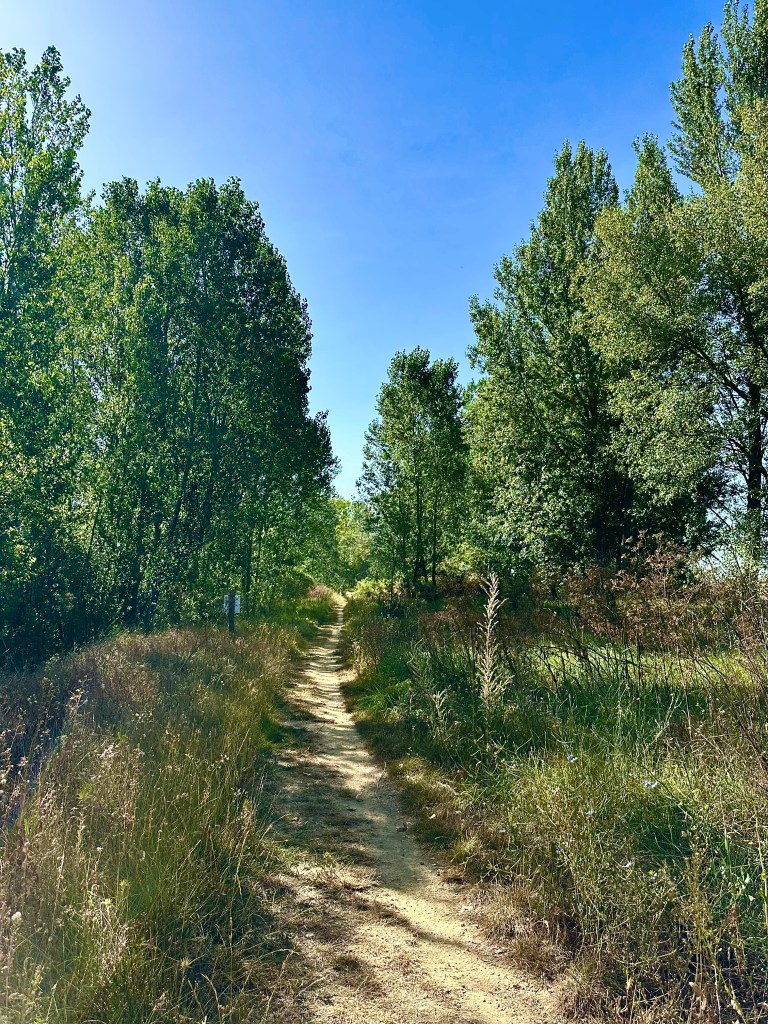
Eventually, the trails met. We had a drink and a bocadillo and met another interesting character from Frankfurt, Kentucky who often sleeps on benches, in the field or under a bridge when it rains. That’s his thing! Paula and I bid him adios, and then had our share of walking under the sun as the temperature rose to 85 degrees along the road into Carrión.
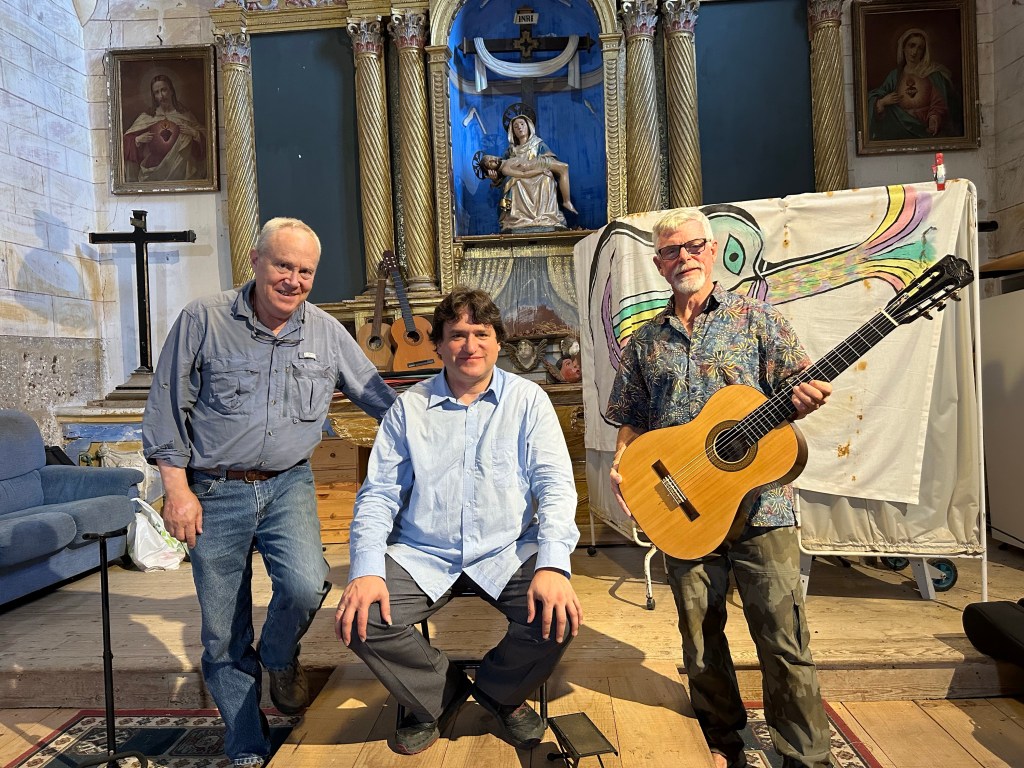
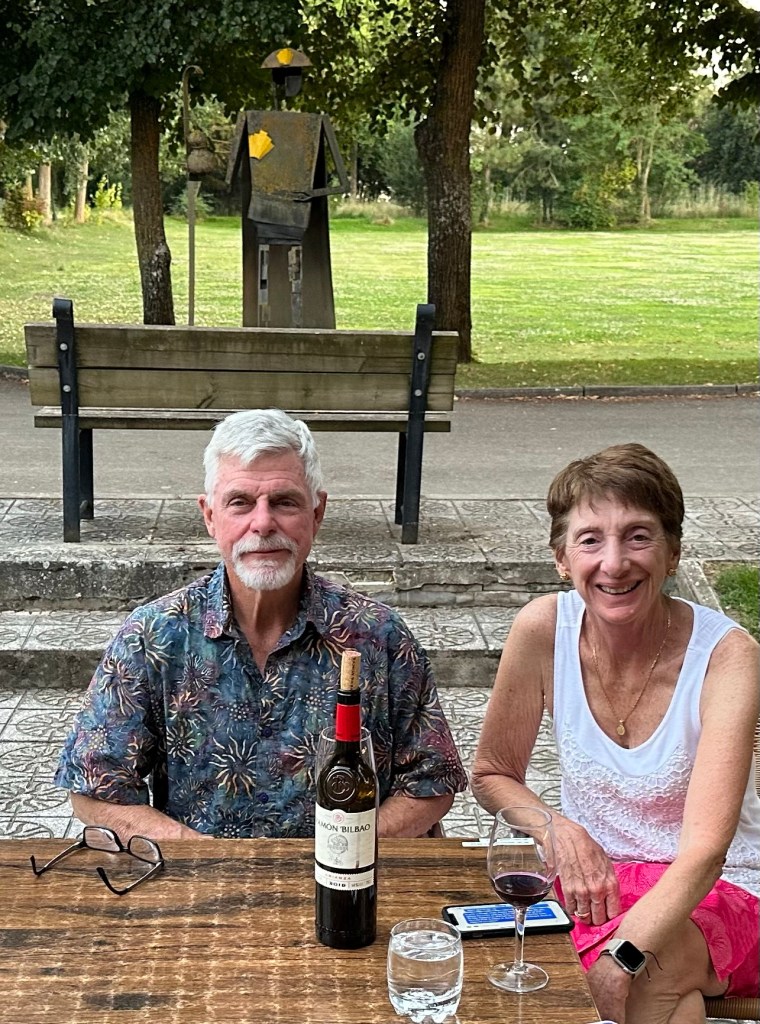
We were both feeling the effects of the heat and headed straight to the Bar España for our arrival beer. Then we hoofed it to our hotel on the other side of town. We had a nice light meal. We were still too overheated for anything heavy. After a short nap, we headed to La Ermita de La Piedad, on the other side of town, to find Federico Sheppard the luthier.
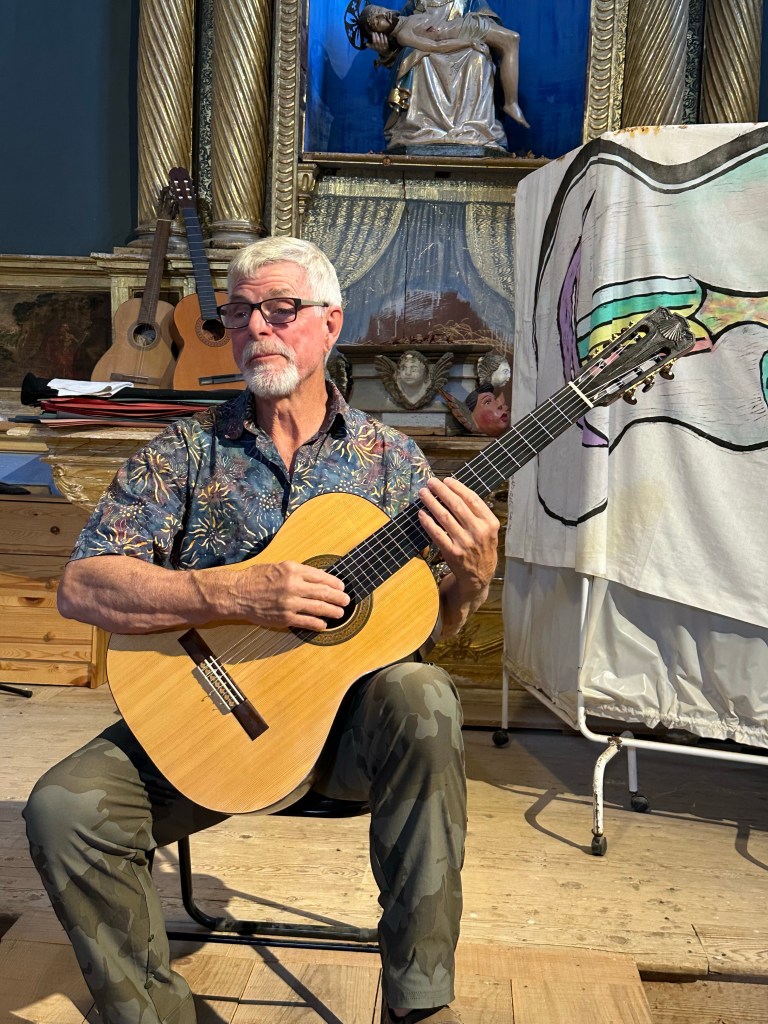
Freddy took us outside to see a part of the Ermita that would be restored with the help of funds from my guitar purchase. He then took us back inside, and voila! there was Rene Izquierdo, a well known classical guitarist playing my new guitar. This private concert, which lasted about 45 minutes, was an unexpected pleasure. It was my guitar’s baptism.
We will not set the alarm tonight.
Welcome to the Meseta
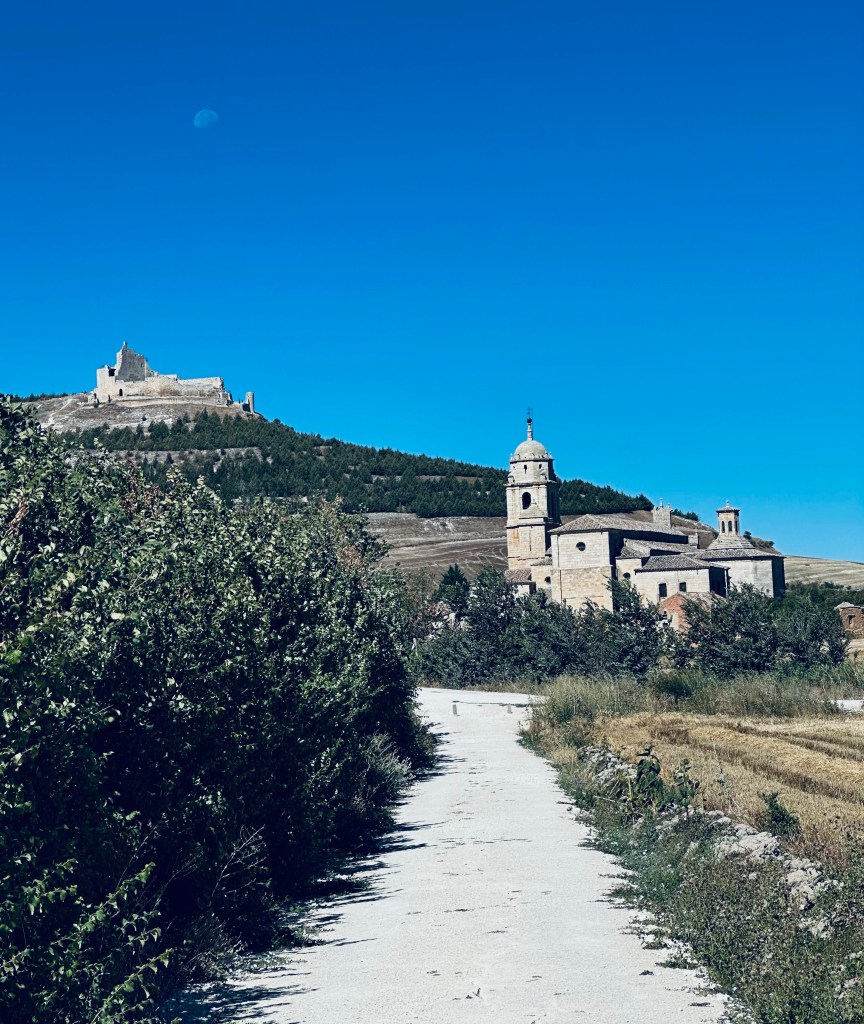
Castrojeriz has a lot more to offer than Hornillos and we got to see a lot of it just looking for a place to eat lunch. Our hotelier told us we had arrived too late to reserve a table so we went in search of food. We asked a couple locals and they recommended the Meson, so that is where we went and ate well. Returning to our lodging, we came across a community park where a group of men were playing a game called Tuta. The object is to hit a wooden pin, the “tuta”, with a metal disk about 3” in diameter and 1/2” thick, from about 40’. There were some incongruities about the rules of the game, but we did see several “hits”. I think if you miss you have to yell “puta!”.
We then went to the Santo Domingo de Guzman cathedral which had a light show of the Camino projected on the ceiling and several interactive booths with more on the history, legends and facts of the Camino. Santo Domingo was founder of the Dominicans who were prominent early on in the New World. (What’s the capital of the Dominican Republic? Santo Domingo!). The church was damaged in the Lisbon earthquake of 1756 and one of the main columns is visibly tilted, though buttressed on the outside.
We walked by an interesting hostel run by a Buddhist holy man and another woman. Our new Camino friends, Ed and Darcy, stayed there but found there were few boundary conditions, mandatory meditation and some weird pilgrims who seemed trapped there. Ed and Darcy managed to escape early before the Koolaid breakfast.

We rose early so we could take advantage of the cool morning weather and set out for Fromista, more than 15 miles distant. There is a difficult climb outside of Castrojeriz which had Paula a little worried, but she negotiated it successfully. The rest of the trail conformed to the meseta characteristics: flat and dry with wide vistas of brown earth and patches of green and yellow. After nearly 3 hours we found a coffee shop for breakfast.
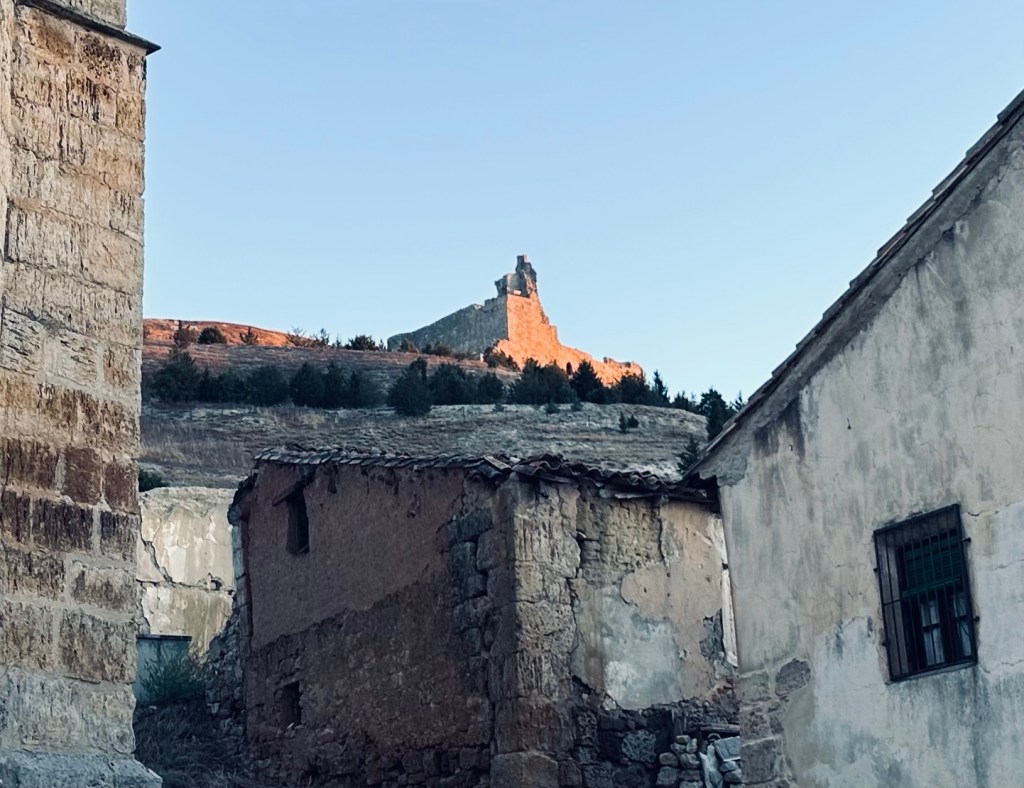

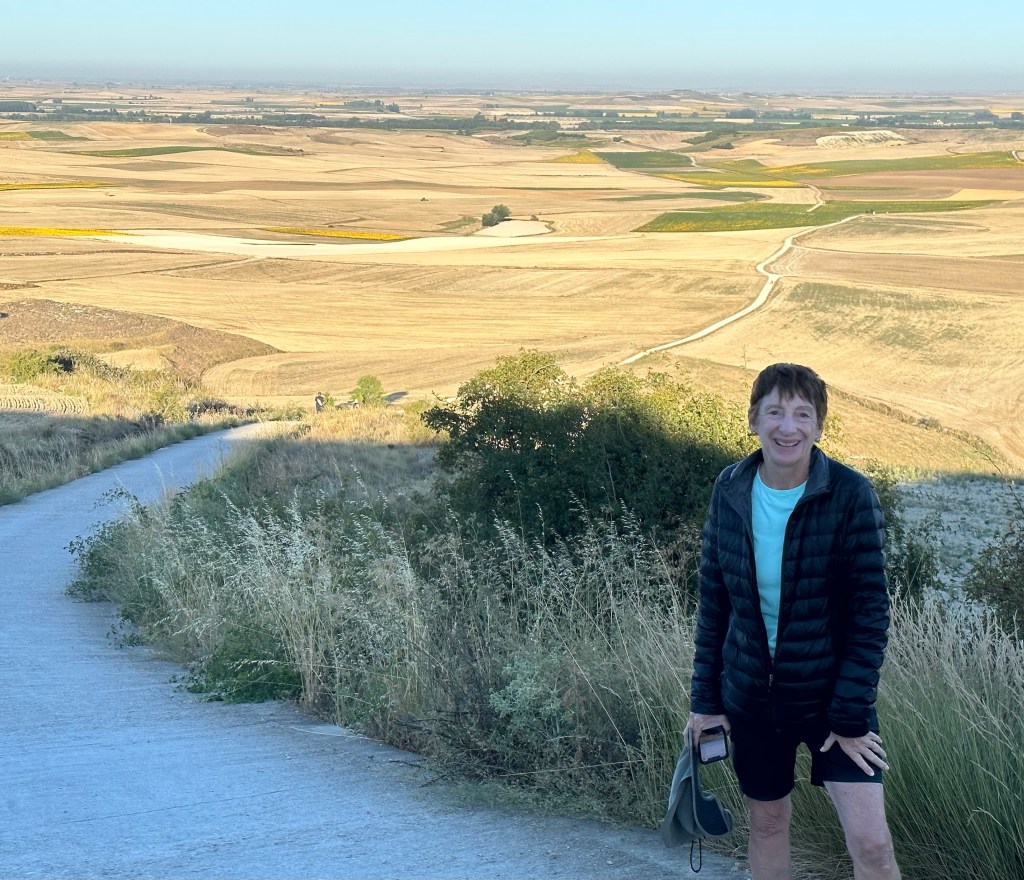
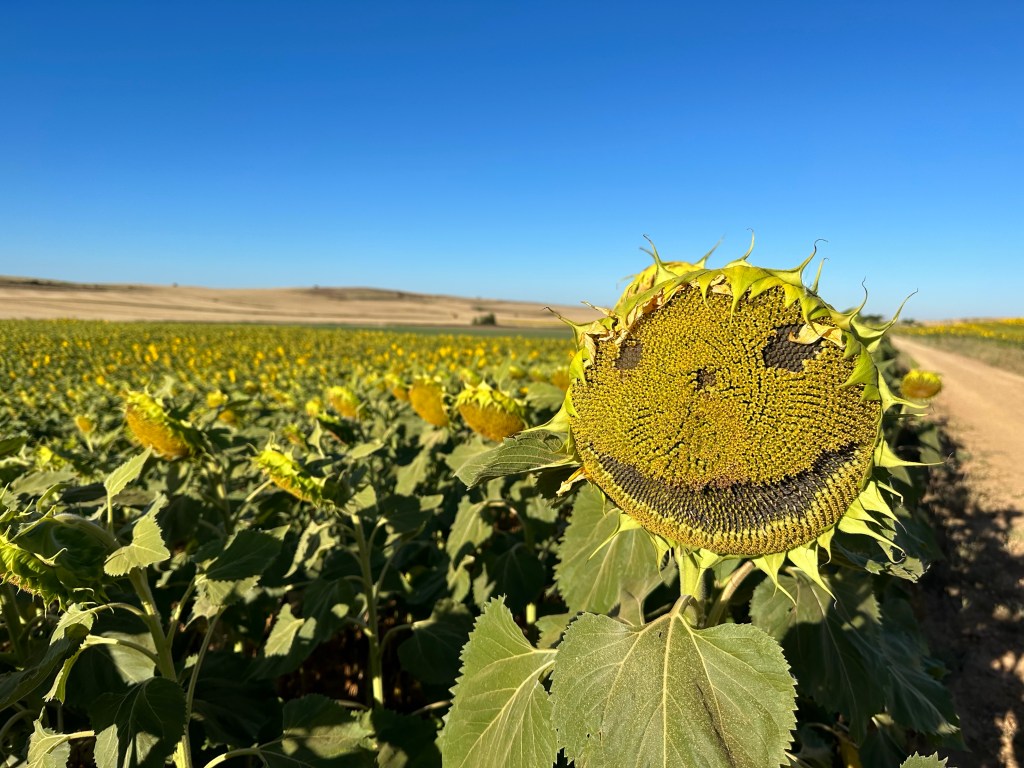
The Pisuerga river broke the monotony of the dry trail as we neared Fromista. The Pisuerga rises in the Cantabrian mountains and it flows into the Duero. A forest of poplars surrounded the river and provided welcome shade.
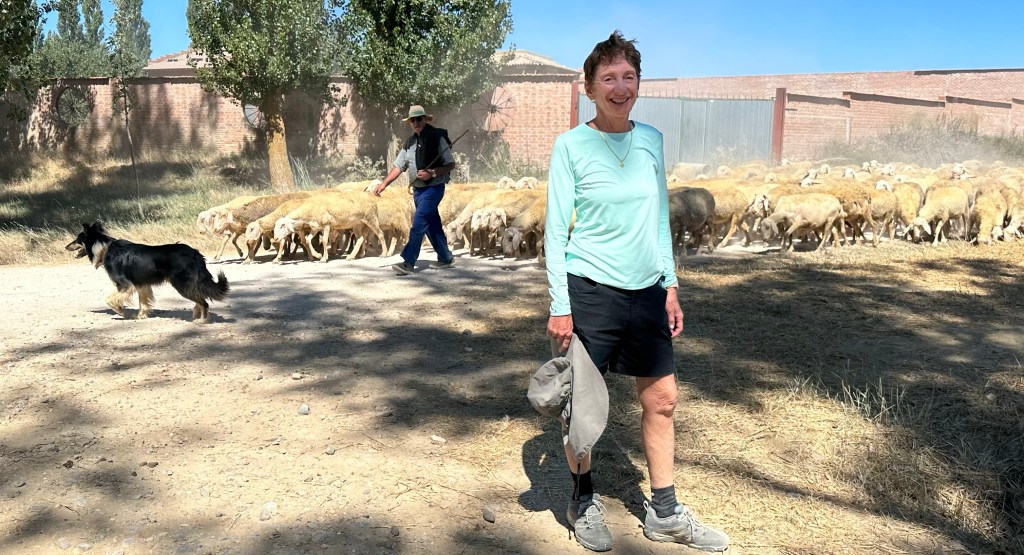
The last few miles past Boadilla were along a canal with a little canal boat ferrying tourists. (Memories of Erin’s birthday — 30th, wasn’t it?).
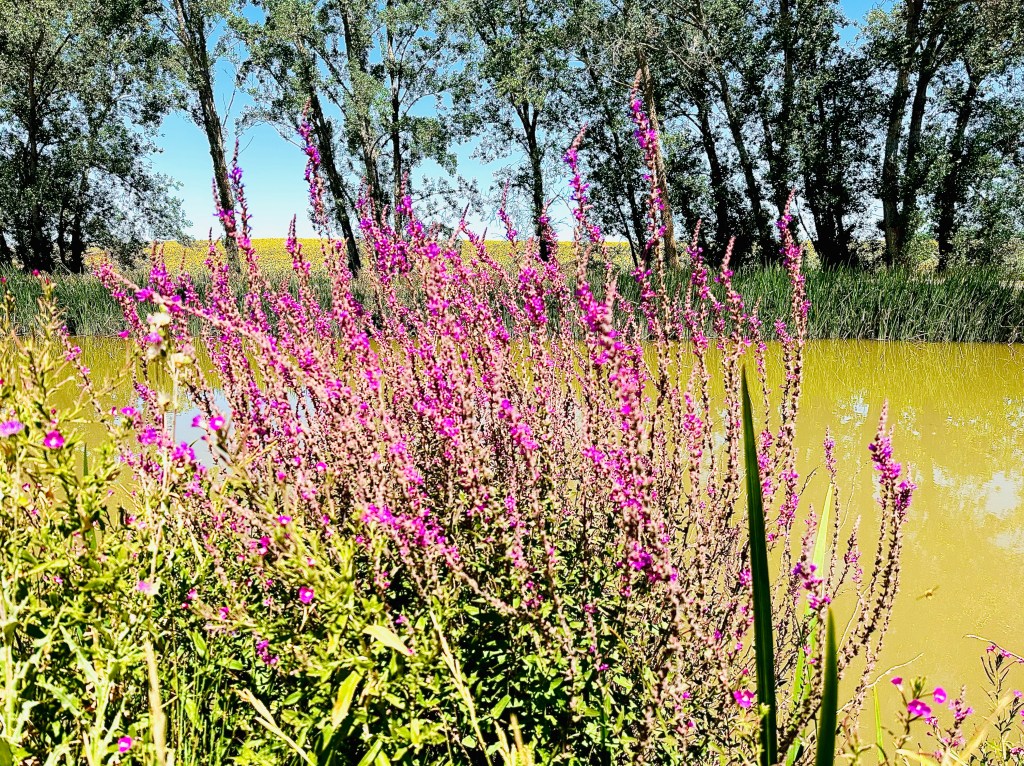
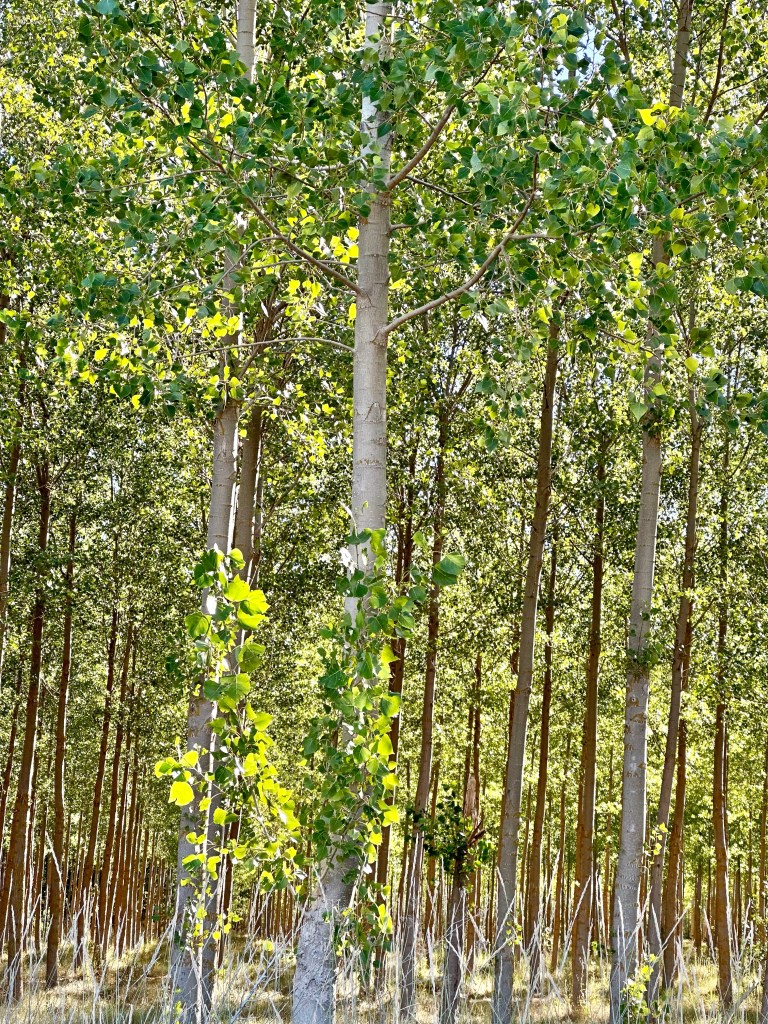
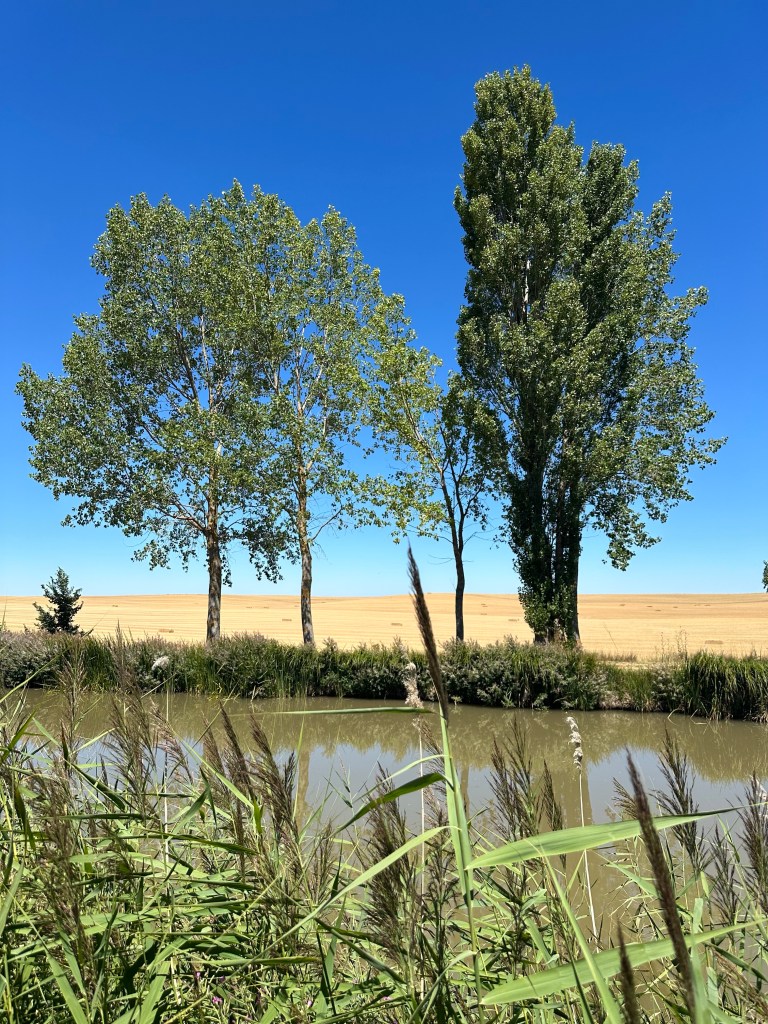
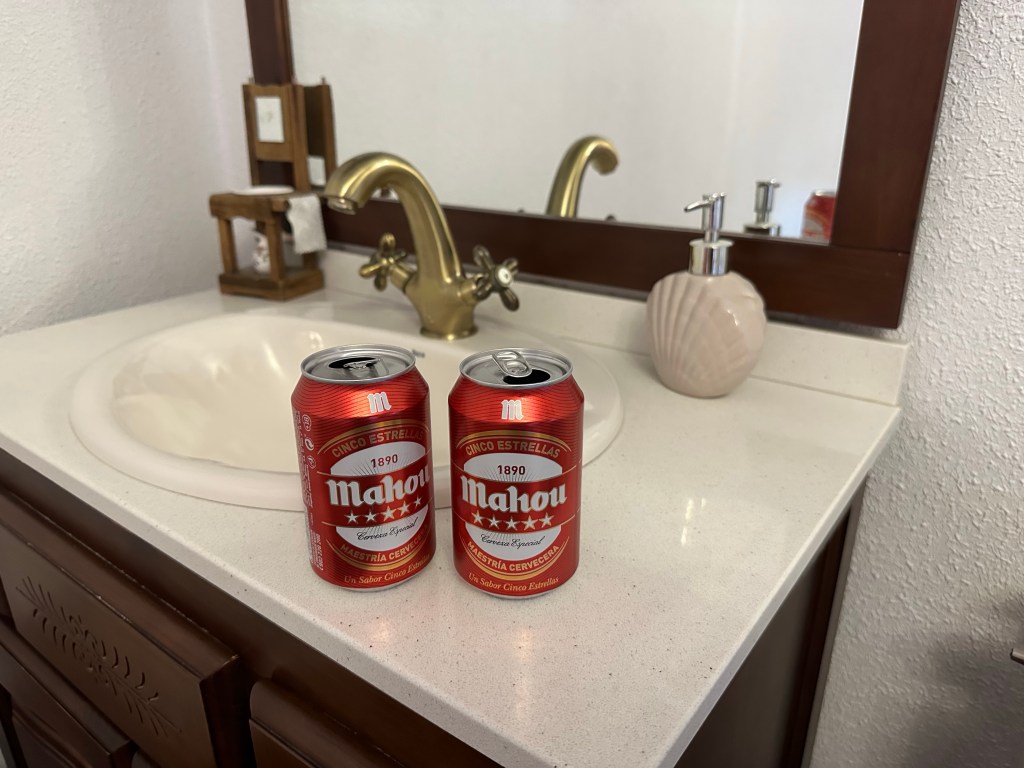
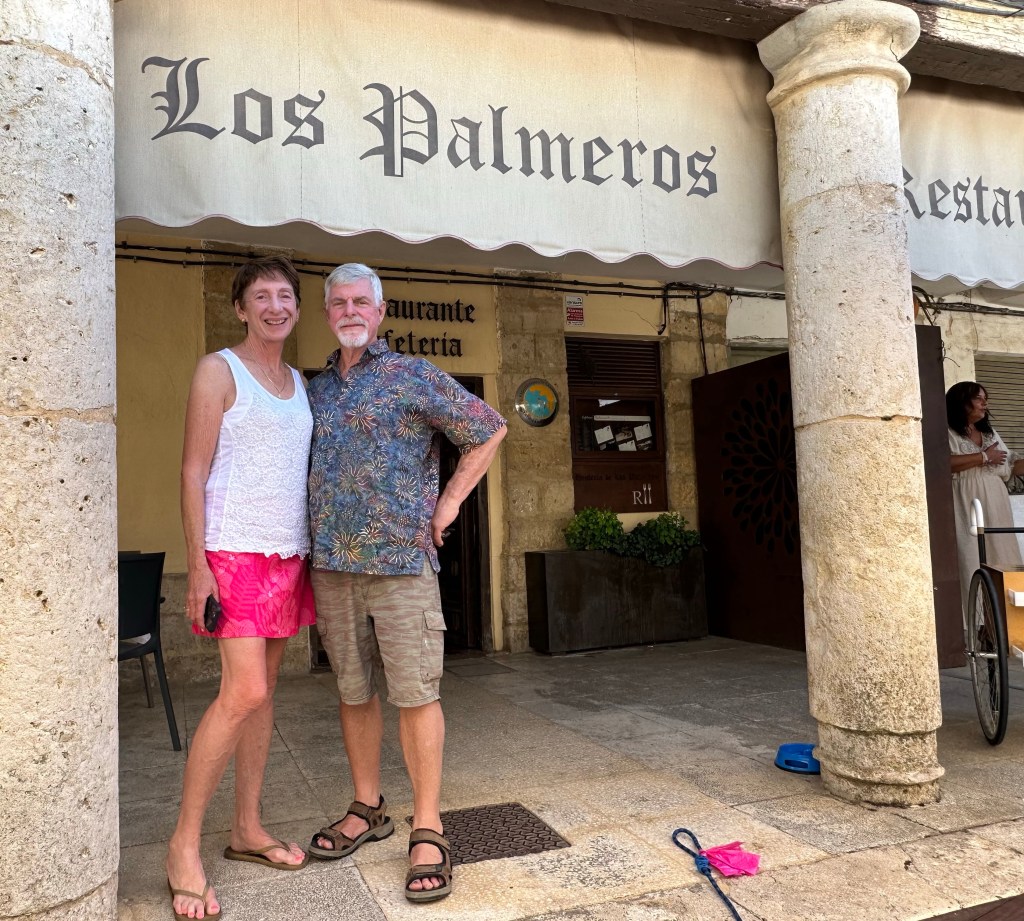
It was nearly 90 degrees by the time we reached Fromista and Sra. Mila welcomed us to the Hostal Camino de Santiago with our arrival beer – a couple cans of cold Mahou. We celebrated Paula’s achievement with lunch at Los Palmeros, an upscale restaurant in Fromista. We had a great meal but the most unusual dish was the gazpacho: it was served on a scoop of tomato and basil ice cream. Perfect for the hot day!
The Mini-Camino
The Camino has drawn me back…again! However, there is a reason for this madness. In fact, there are three reasons.
First of all, I wanted to introduce Paula to the Way. Between us, she is the more dedicated walker. But she does not want to walk 15 miles a day for 30 days while living out of a backpack. But fate had brought us to Europe, following a spectacular 14-day Arctic cruise from Reykjavík to Bergen via Svalbard island where we were within a whale’s tail of the 80th parallel and well north of the Arctic circle sailing the land of the midnight sun. We popped down to Oslo and then to Madrid for a night. We hopped on a bus and then another and ended up in Villanueva de Argaño. We walked into a bar and asked for a taxi to get us the final 5 km to Hornillos del Camino. We were told that Villanueva does not have any taxis. After a few calls, the owner of La Casa del Abuelo, the albergue in Hornillos we were staying at, picked us up and drove us the final leg.
The second reason to do a mini-Camino was to fill in the gap I missed on my first walk along the Camino Frances. With all the back-tracking and breaks I took the first time around, I had to skip the interval between Hornillos and Carrión de los Condes so that Lisa and I could stay on schedule to meet Paula and John in Santiago de Compostella.
The third reason is that I have an appointment in Carrión de los Condes to meet the famed luthier Federico Sheppard who has built a special Camino guitar for me. He reports that the guitar strings are already vibrating. She is singing and I am beguiled.
Of course, you don’t really need a reason to walk the Camino, even just a portion of it. We spent the night in Hornillos and rose at 6:00 in the morning to begin our walk together. It was a 12.5 mile walk to ease Paula into the Pilgrim’s routine. Paula did great!


Epílogo
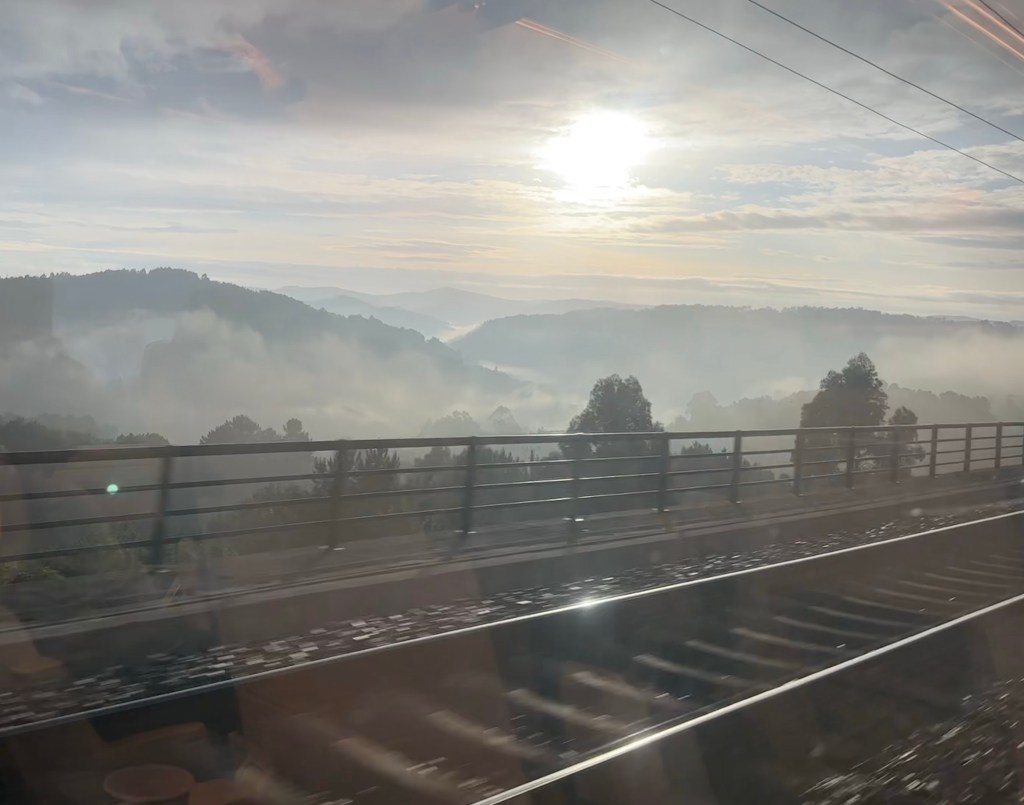
The train has pulled out of the Santiago de Compostela train station and in the distance I can see the blue waves of Galicia’s mountains rising up through the mists. My God, how they tug at me! It brings tears to my eyes! It is like leaving a beloved child. I will return one day, but that child will have changed; and I will change.
Before I can truly say goodbye to my Camino, I have to say thank you to each of you who followed along with me. I never needed an incentive to get up in the morning and start my daily trek. But I did need a reason for writing my posts each night. Thanks for sharing my adventure.
Day 31. The final thrust
And so the adventure pauses.
Last night, after my fine meal, while I watched Man City beat Inter Milan for the Champion’s League trophy, I toyed with the idea of taking advantage of the hotel’s offer to drive me to the airport from where I could catch a bus into Santiago de Compostela. However, when I woke up this morning, there was no deliberation. I hoisted on my backpack, slung on my day bag and headed off to complete my Camino.
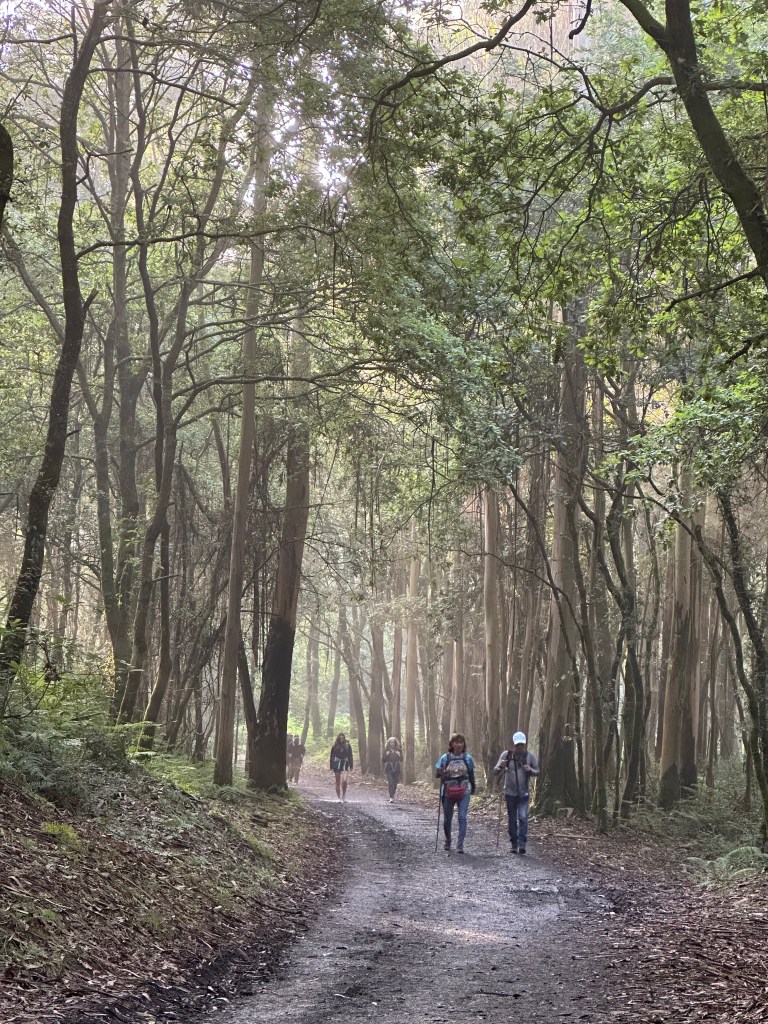
I walked my normal pace but I took more breaks than I normally would. It was amusing to sit at the coffee bars and watch the pilgrims, some newbies and some veterans, men and women, old and young, from all over the world making their final thrust to the great pilgrimage destination.
No parador this time. I booked a room at the Casa Diocesana Via Lucis, a hospedaría, which was once a convent. It is located within the grounds of the University of Santiago de Compostela. It is simple, close to train station and to the Cathedral, and provides a quiet place to spend the final day.
I walked into Santiago earlier and had a plate of sardines for a late lunch. Now I am sitting at a family restaurant near the Via Lucis, watching families relax on a Sunday afternoon. Boys are kicking soccer balls with their dads, the girls lie on blankets on the grass comparing jewelry and older folks look on as they sip their beer or coffee. I am taking in the unintelligible chatter of the people around me and the twittering of the birds which are enjoying a late sunny afternoon. There is a deep and satisfying peacefulness about this particular place in the universe. I don’t need for it to last forever, but a little longer would be nice.
Day 30. Back to Santiago
Many years ago, when men and women were depicting their world in elaborate drawings on cave walls, there was a cloud formation which collected moisture from the great waters which we now call the Bay of Biscay. These clouds, when full, would return the waters to the Cantabrian mountainsides, creating a green paradise of forests, ferns and flowers. More recently, as men and women began walking across a path to the south of the mountains, some of these clouds took the waters and cool winds associated with the rain and poured it out upon these pilgrims.
The clouds at first did not know where these pilgrims were going, but wanted only to cool them in the hot summers and provide water for the streams from which they drank and bathed. Yet after more time, the clouds became curious as to where these people were traveling and decided to follow them. Thus, they learned that these intrepid souls were traveling to a place called Santiago de Compostela. The clouds so fell in love with Santiago that they did not leave and remain there to this day, delivering rain as is their custom.
And today, the villages around Santiago de Compostela hold festivals during which they chant incantations and send up booming fireworks in an attempt to break apart these clouds which bring this never-ending rain. The clouds are amused by this, thinking these people are celebrating their presence.
In yesterday’s post, I talked about the distractions we create for ourselves. Any of you who know me well will know one of my favorite distractions is the pipe organ. Last night I took the bus into Santiago to listen to David Briggs play the organ at the Cathedral. After blowing out the cobwebs with an arrangement of William Walton’s Spitfire, he played a delicate version of Claire de Lune which was my favorite piece of the evening. It was a great evening, although a few pieces wandered a bit too long before resolution. I closed my eyes and, accompanied by the brash arrangements only a pipe organ can produce, recalled memories of my Norte/Primitivo passage. Other impressions came to mind: the fall from grace of Adam and Eve, the immensity of time and space, the perilous life of a butterfly.
I took a pre-arranged taxi back to Pension Ribadiso, had a good sleep and put in an honest 15 miles today, stopping at the Casa Rural Piñeiro which now takes the top spot (sorry Sean and Mynhardt!) for best meal along the Camino. Set off a few kilometers from the Camino (thank goodness to get away from the last-100-km-crowd), this country lodge was a true surprise with a great kitchen focused on attention to local foods and wines. A fitting, if unexpected, grand finale to this Camino.
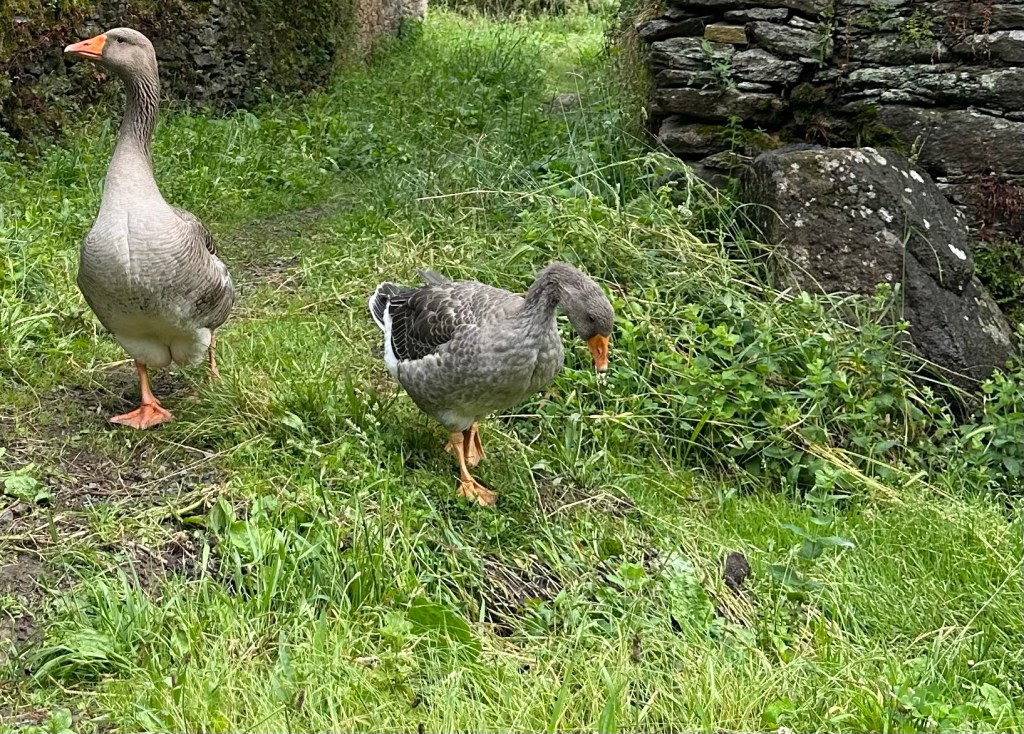
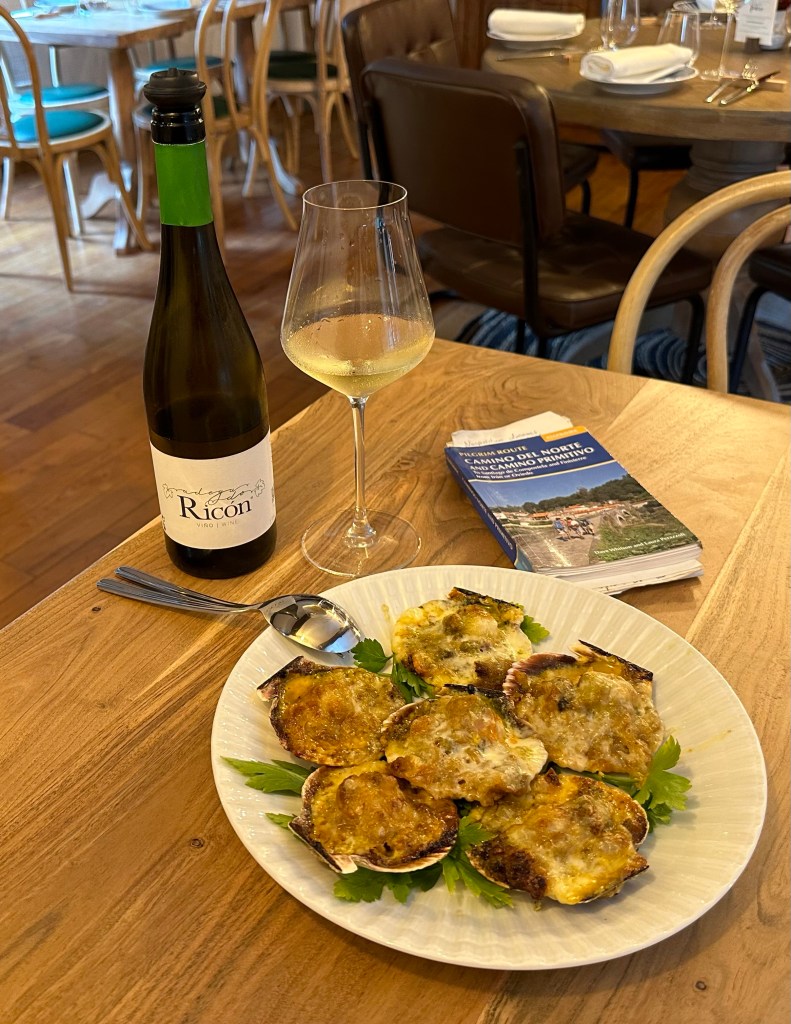
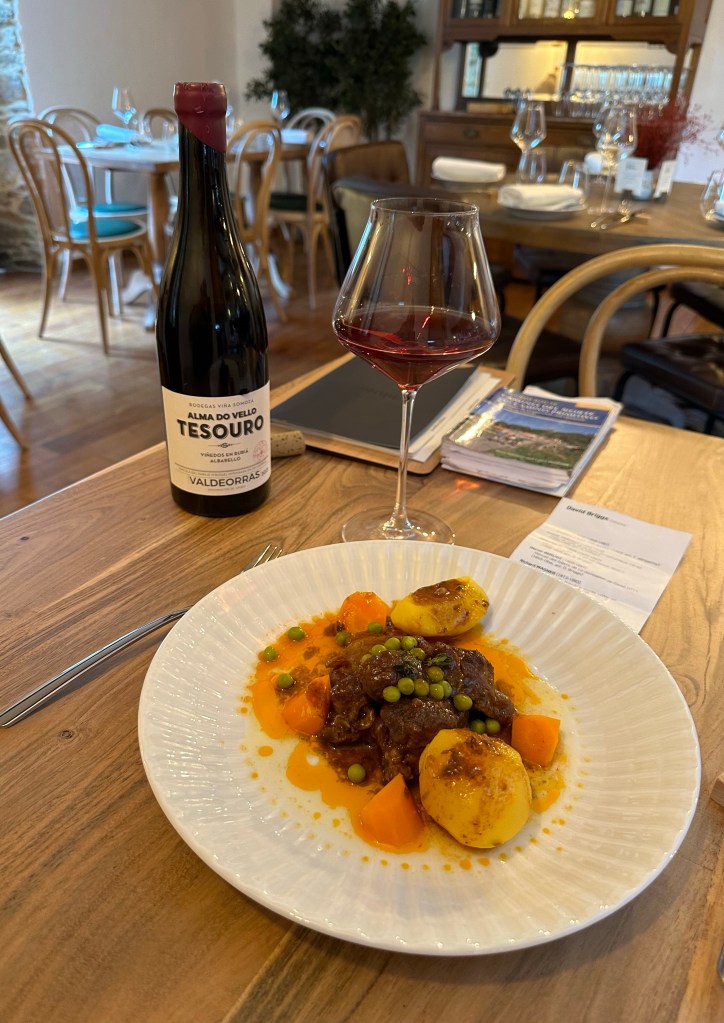
Today has been a great day, one of those days you get up and the world is a beautiful place and just gets better. The Camino has its ups and downs, both literally and mentally. So I take the good vibrations of today with a measure of caution. The elation experienced last year upon entering Santiago will not be repeated, nor is it expected. I look forward to a quiet day, one of preparation for the journey home. And I hope that the local villagers have worked their magic on the clouds.
Day 29. The rainbow
I took a bus from Lugo this morning. A full rainbow arched across the western sky. The bus followed close to the Camino Francés and as we stopped in Melide, the confluence of several different Caminos, I noticed an increase in the number of peregrinos, amplified also because many pilgrims decide to do only the last 100 km. I got off the bus in Ribadiso and ducked into a Repsol service station to get out of a steady drizzle of rain. By the time I put on my raincoat, the weather had cleared up. I walked against the grain a kilometer back to the Pensión Ribadiso and lost count after seeing sixty pilgrims walking towards Santiago. I was way too early to check in so I went across the street to the Meson Ribadiso.

I sat down and watched the people go by. There is a very different vibe on the trail during these last 100 km. After walking relatively secluded trails and sharing the common bond of a great distance travelled, it is a bit of a shock to meet these new pilgrims. Some, of course, had come a long way and were finishing the Francés or the Norte or the Primitivo, but most had only just begun. From the scowls on many faces, they were unhappy with the strain or the weather or perhaps only worried about their next lodging.

I felt a twinge of sadness because this mad rush signals the end of an adventure. I remember a similar emotion last year at the end of the Francés. No more days of walking alone through forests and over mountains with nothing but my thoughts, or the occasional horse or cow or ancient hermitage – or a pilgrim – to punctuate the day.
And what thoughts run through a pilgrim’s mind? I know that in the mornings, when the mind and body are fresh and the trail is new and inviting, the thoughts come tumbling out too fast to ponder any one of them for too long. Like waves on the beach, each successive one washes away the previous one and is itself washed away before it can make an impression. As the day goes on, the focus on the trail becomes hypnotic and the mind relaxes into a state of meditation. Now the thoughts can be better captured and corralled. It becomes easier to cull the frivolous and contemplate the more profound. Still, they slip away like water through your hand, so you must be quick to discern. Most disappear and are forgotten, like dreams. Later in the day, the mind and body are operating in a robot mode – in a trance – and placing one foot in front of the other is the only thing that matters. The horses which run wild in the morning until briefly tamed, are, in the afternoon, distant, blurred and camouflaged amongst the trees.
Before starting the Francés last year, I imagined myself thinking about my boyhood as I spent hours on the trail. What had happened to that kid, I wondered. What stories I could tell him about the adventures that stretched out before him. Would he recognize me, or I him? As it turns out, I did think about him, but I could not pin him down long enough to have a meaningful conversation. Maybe I tried too hard; this year, a few weeks ago, we met. You met him too. He is the boy down on the beach.
This year, I had loftier intentions. I wanted to contemplate eternal life. There was something that Father White, who gave me my Camino blessing this year, said in a homily that shook me. I do not remember the words, only the effect, and it probably had nothing to do with life or eternity or contemplation. One night, somewhere along the Way, eternal life nuzzled up to me, I think as surprised of me as I was awed by It. That is all I can say for now.
While I was talking with Mad (short for Madeline, just so you know), a woman from New Zealand came rushing into the mesón. She reminded me of the rabbit in Alice in Wonderland. Totally preoccupied, she asked a few questions, I think as an excuse for interrupting a conversation, and then, just as suddenly, she was off again, presumably late for an important date. Upon reflection, I saw some of me in that woman. Too often, I focused on the destination when I should have stopped, removed my backpack (and shoes!) and listened to the sounds around me, gazed upon the awesome sights I was amidst. How much wiser I would be! That seems to be the way of life, especially the life I return to – happily mind you – a life built around distractions, diversions, disturbances – anything to keep our mind agitated and unfocused and oblivious to the one thing that really matters. We are all rushing along to that ultimate important date. If there is anything I learned on this journey, it is that life and eternal life are the same and must be embraced and cherished, like a lover or a friend or a fortuitous stranger.
Day 28. Taking it easy
Lugo has been a good place to take a break. The hostel is nice and clean and perfectly located, and Pedro at the front desk goes the extra step to help me locate the bus and train stations, as well as Alquimia, home of the best gin and tonic in town.
Lugo happens to be celebrating a music festival this week and last night featured an evening with soprano Roberta Invernizzi accompanied by Ars Atlantico, a group dedicated to the interpretation of music from the baroque through the classical eras. The group included José Manuel Dapena, playing a guitar crafted by José Luis Romanillos, master luthier, avid promoter of Spanish guitar music and author of several books about Antonio de Torres, the father of the modern classical guitar. Roberta was the star, of course, and she had a beautiful and captivating voice.

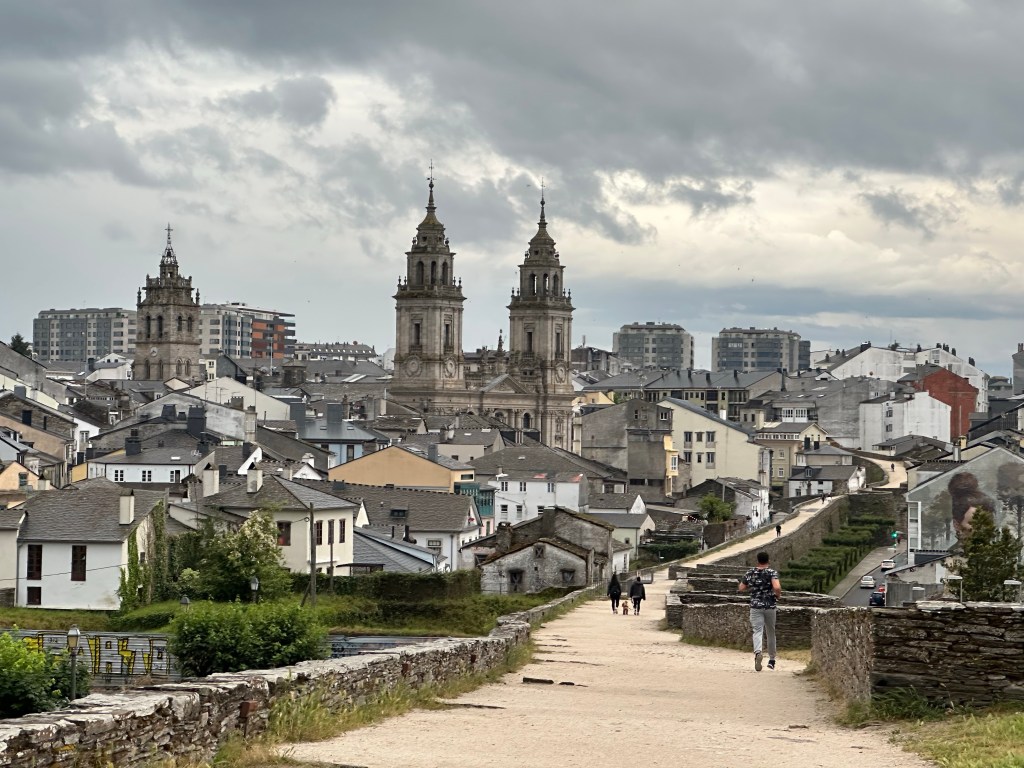
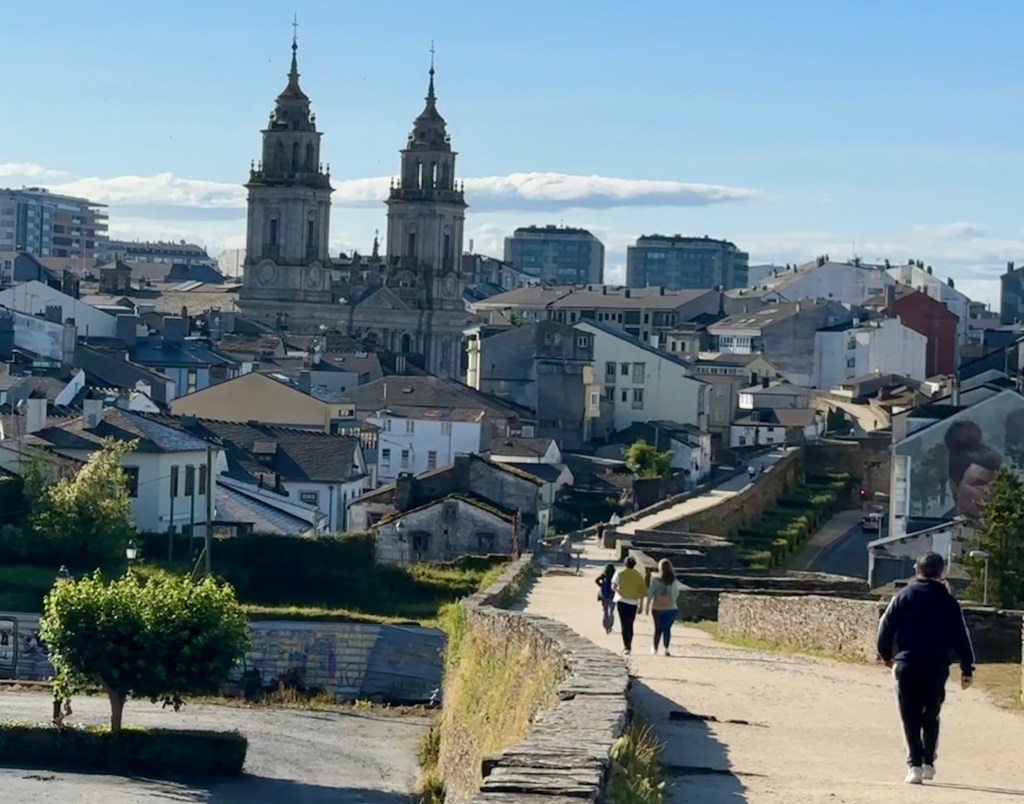
Lugo was originally a Celtic village but after Roman armies invaded the Spanish peninsula to dislodge the Carthaginians, they established a stronghold in Lugo to control the gold mines on the south of the Cantabrian mountains. The Roman defensive wall which still surrounds the city was built in the 3rd century and is a UNESCO World Heritage site. You can walk around the top of the wall which is over 2 km in length. I walked around twice and saw other strollers, dog walkers and joggers. Gonna kill my daily average unless I do another 20 laps, but the thunderstorms are going through. Maybe time to head over to Alquimia.
By the way, regarding the fellows in the last picture of yesterday’s blog: they are fellow peregrinos from Huelva. Just north of Huelva, to be precise, the region that produces the best jamon jabugo in Spain. A special breed of dark-haired black-footed Iberian pig is raised in this micro-climate and fed on acorns for the one-month fattening period to give the distinctive taste and melt-in-your mouth texture. After their sacrifice in winter, the shoulder and hind legs are cured in salt for a month or so and then dried for up to three years in special drying warehouses. Victor, the younger man in the picture (no, not me), recommended that I purchase the caña de lomo, the dried pork loin of the Iberian cerdo jabugo. His father, the old guy (no, not me), suggested if you want to ensure the best quality and not be fooled by unscrupulous vendors, purchase at Corte Ingles.
I have not seen many of the peregrinos I started out with. Maybe this break will give them a chance to catch up. I did see Takaya, but he was on the other side of the plaza when a thunderstorm rolled through. Back on the trail tomorrow!
Day 28. Taking it easy
Lugo has been a good place to take a break. The hostel is nice and clean and perfectly located, and Pedro at the front desk goes the extra step to help me locate the bus and train stations, as well as Alquimia, home of the best gin and tonic in town.
Lugo happens to be celebrating a music festival this week and last night featured an evening with soprano Roberta Invernizzi accompanied by Ars Atlantico, a group dedicated to the interpretation of music from the baroque through the classical eras. The group included José Manuel Dapena, playing a guitar crafted by José Luis Romanillos, master luthier, avid promoter of Spanish guitar music and author of several books about Antonio de Torres, the father of the modern classical guitar. Roberta was the star, of course, and she had a beautiful and captivating voice.
Lugo was originally a Celtic village but after Roman armies invaded the Spanish peninsula to dislodge the Carthaginians, they established a stronghold in Lugo to control the gold mines on the south of the Cantabrian mountains. The Roman defensive wall which still surrounds the city was built in the 3rd century and is a UNESCO World Heritage site. You can walk around the top of the wall which is over 2 km in length. I walked around twice and saw other strollers, dog walkers and joggers. Gonna kill my daily average unless I do another 20 laps, but the thunderstorms are going through. Maybe time to head over to Alquimia.
By the way, regarding the fellows in the last picture of yesterday’s blog: they are fellow peregrinos from Huelva. Just north of Huelva, to be precise, the region that produces the best jamon jabugo in Spain. A special breed of dark-haired black-footed Iberian pig is raised in this micro-climate and fed on acorns for the one-month fattening period to give the distinctive taste and melt-in-your mouth texture. After their sacrifice in winter, the shoulder and hind legs are cured in salt for a month or so and then dried for up to three years in special drying warehouses. Victor, the younger man in the picture (no, not me), recommended that I purchase the caña de lomo, the dried pork loin of the Iberian cerdo jabugo. His father, the old guy (no, not me), suggested if you want to ensure the best quality and not be fooled by unscrupulous vendors, purchase at Corte Ingles.
I have not seen many of the peregrinos I started out with. Maybe this break will give them a chance to catch up. I did see Takaya, but he was on the other side of the plaza when a thunderstorm rolled through. Back on the trail tomorrow!
Day 27. Sun came out in Lugo
I woke just after six in the morning to the sound of rain beating against the window shutter on the bedroom window. Here is the rain that was forecast, I thought, and rolled over and tried to get some more sleep. Didn’t work. I got up and opened the shutter and watched the rain fall thickly on the grass outside. I started considering options. Walk in the rain, wait til later in the day when it was supposed to taper off, take a bus, and so on. By the time I had risen, had a shower (in the itsy bitsy shower stall), dressed and packed my mochila the rain had diminished to a steady drizzle. Before I knew it, I pulled on my handy dandy Hefty trash can liner and was out on the street following the Camino and wistfully watched as a bus to Lugo went by.
The drizzle soon let up even more and I was able to walk without handy Hefty all the way to Lugo. By now, the steep climbs and descents were behind me, the trails were mostly good, and there were no stops along the way for a coffee or orange juice. The drizzly day did remind me of a time when I was in college hitch-hiking back from a spring break in New Orleans to catch a Grateful Dead/Fleetwood Mac concert during Mardis Gras and I found myself after two days of heading north in a pouring rain in Chattanooga, Tennessee and experienced a sense of total defeat. Not despair or demoralization, but complete and utter defeat. I called my Uncle Tom in Chicago, who knew the right people all over the States. Soon a friend of his found me and gave me a bus ticket to South Bend, bringing to a close one of the craziest episodes in my life. I will save that story for later!
Figuring this was going to be my last day of walking, I was watching the kilometer markings. I wanted to get within at least 100 kilometers of Santiago. Just before entering the walled old town of Lugo, I accomplished this feat.

I arrived at my pension in Lugo in record time. Of course, the room was not ready so I went down to the train station to see if I could get a later train. Not that I don’t like Madrid, but I was here to walk the Camino. As it turned out, there was a seat available on June 12 so I grabbed it. Now it was just a matter of changing all the hotel reservations I had made.

 El Peregrino