Today was a challenging day, una caminata muy dura, you might say. But the greater the challenge, the deeper the sense of accomplishment. Also, often, the more exhausted you are!
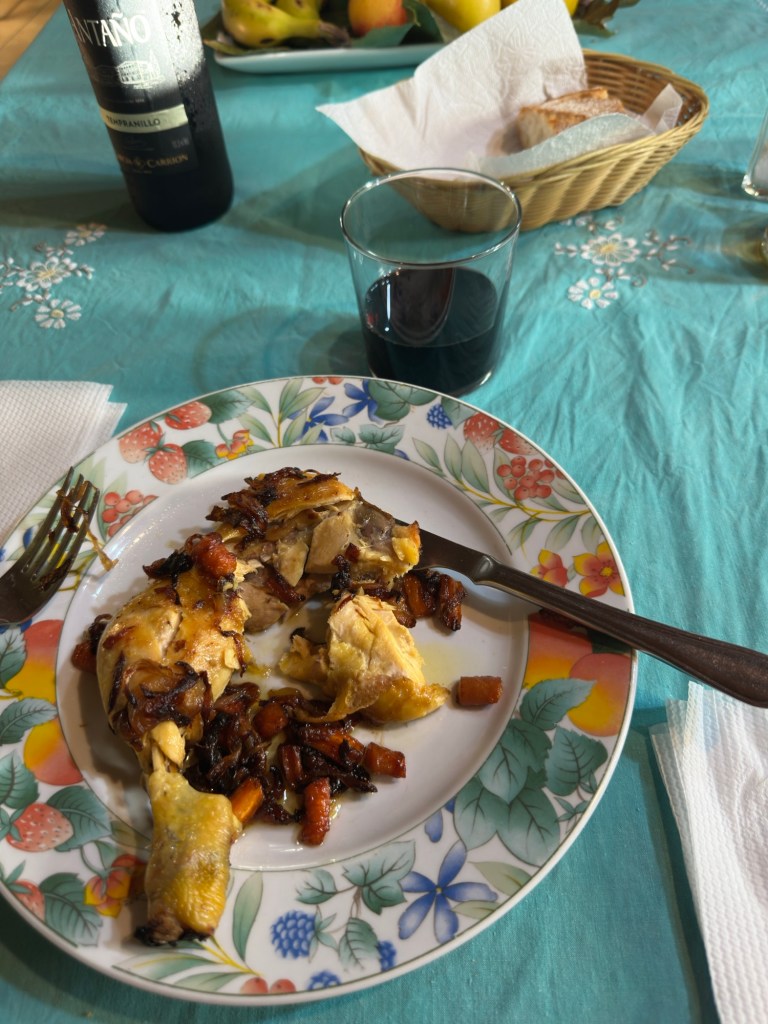
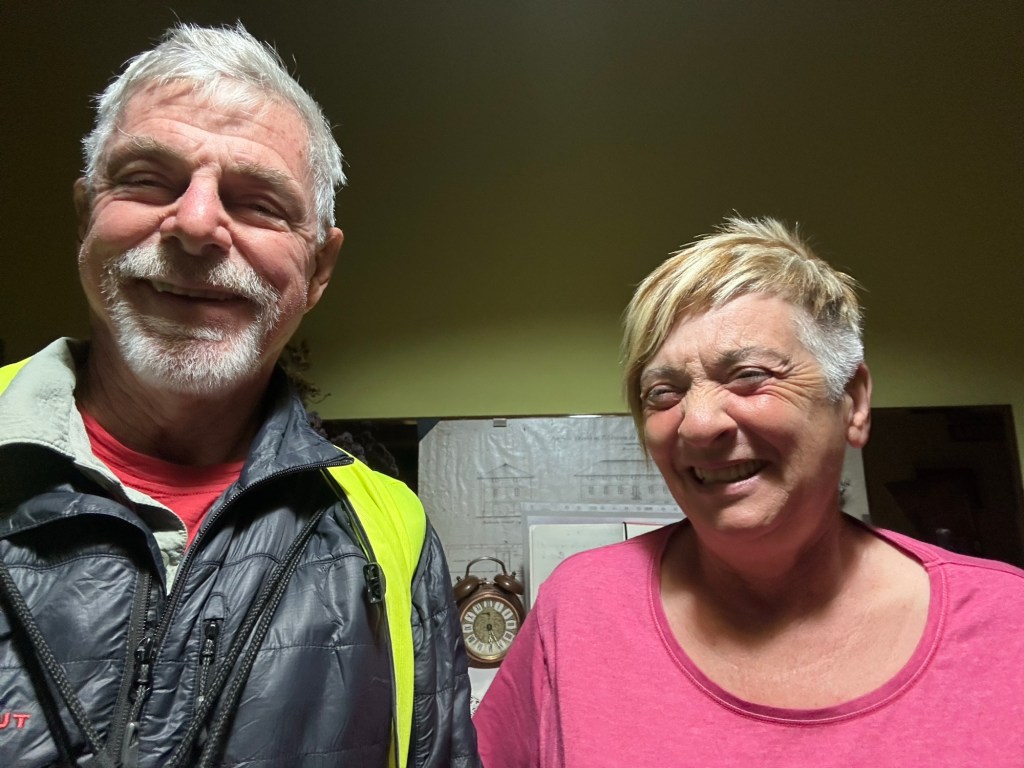
But first, a little more on Pilar, the owner of casa rural Irigoein Etxea (which translates as house at the top of the town) where I stayed last night. As I arrived, she took my sandals and washed them with a brush and water. The proverbial washing of the feet is what I felt. She had an ice cold beer waiting for me. She took me upstairs and showed me to my room. “The best and largest room we have,” she explained. I washed up and had a nap, then went down for another cold beer. She prepared a fine meal starting with cream of calabacín with added veggies from her garden. The main course was pollo luma gordi, free range chicken raised in Guipúzcoa. Of course, there was a bottle of Navarrese tempranillo wine to set off the flavors. After pudding for dessert, I finished with home-made Pacharán, the Navarrese dessert wine made by soaking sloe berries in a special anisette mixture.
Breakfast was waiting in the morning. Hot coffee and toasted local bread. Pilar also prepared a bocadillo for the road. She is that special hostess you mostly hear about on the Caminos in Spain, and here she was, an angel treating me like the most special guest she ever had.
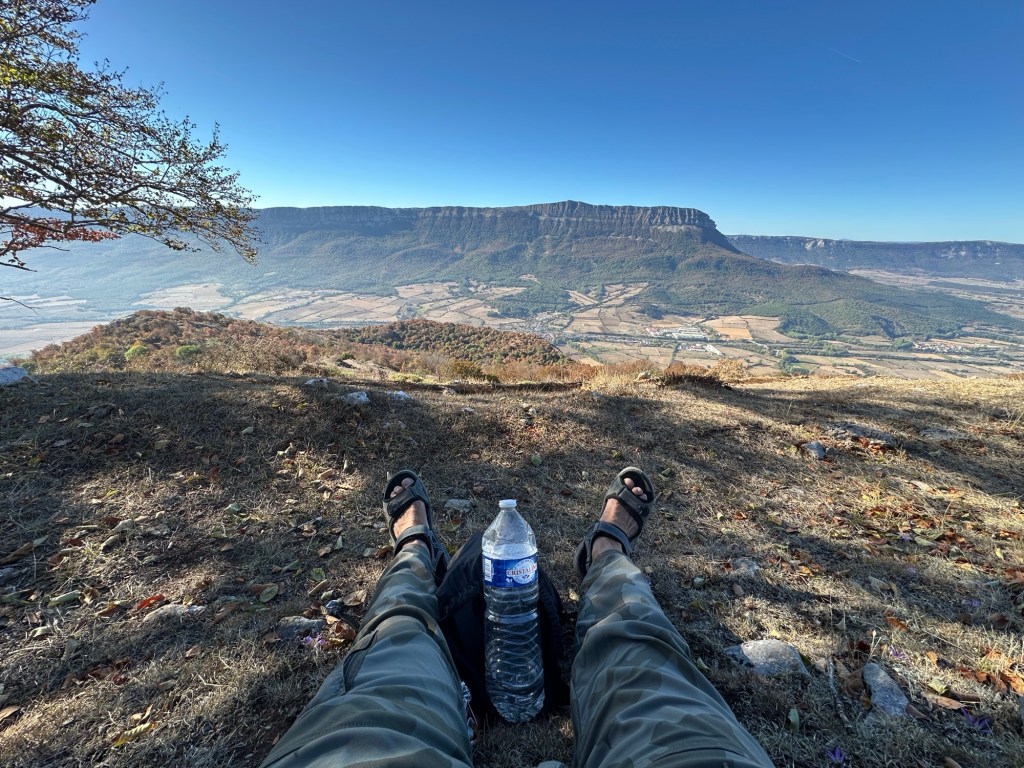
I started the morning as the sun was rising with a 6 km hike to the Zamartze Monastery, a building with Roman origins. My path took me through the Sakana valley dominated with two mountains on either side like sphinxes. San Donato (Beriain) was to my left and San Miguel (Aralar) was on the right.
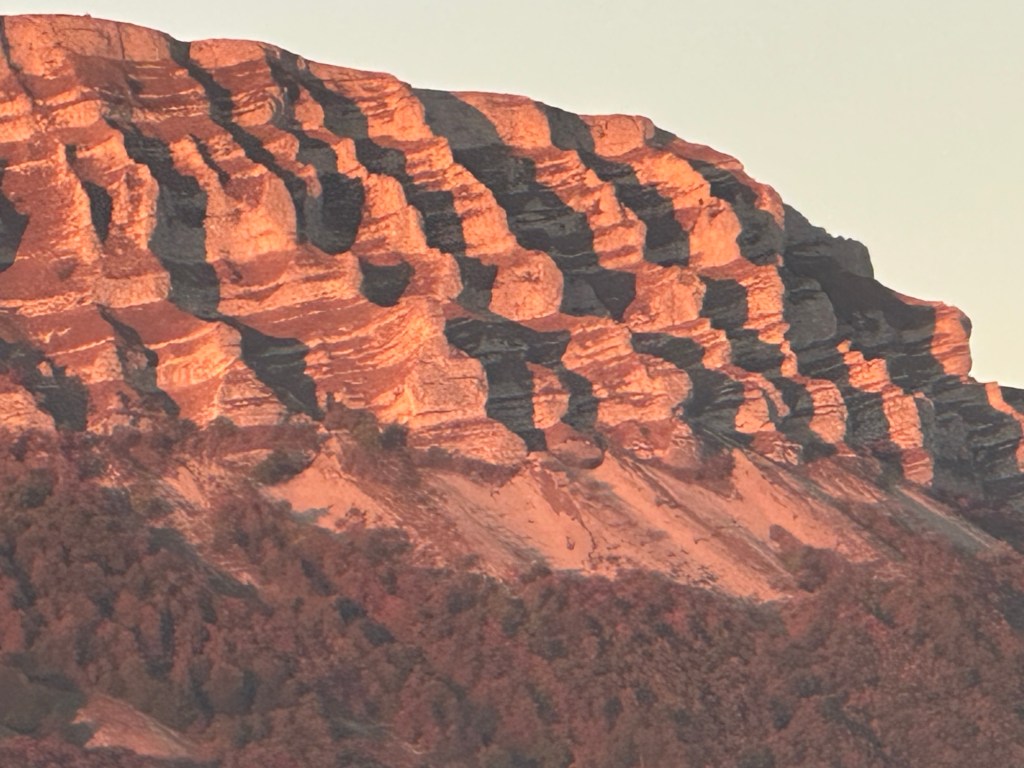
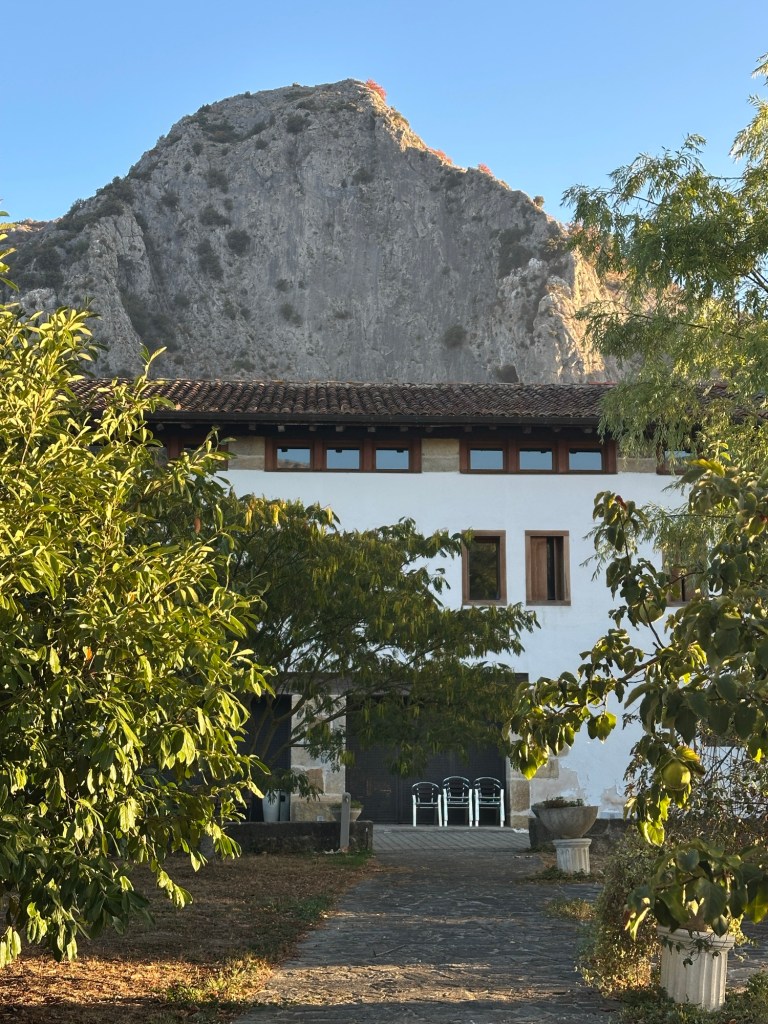
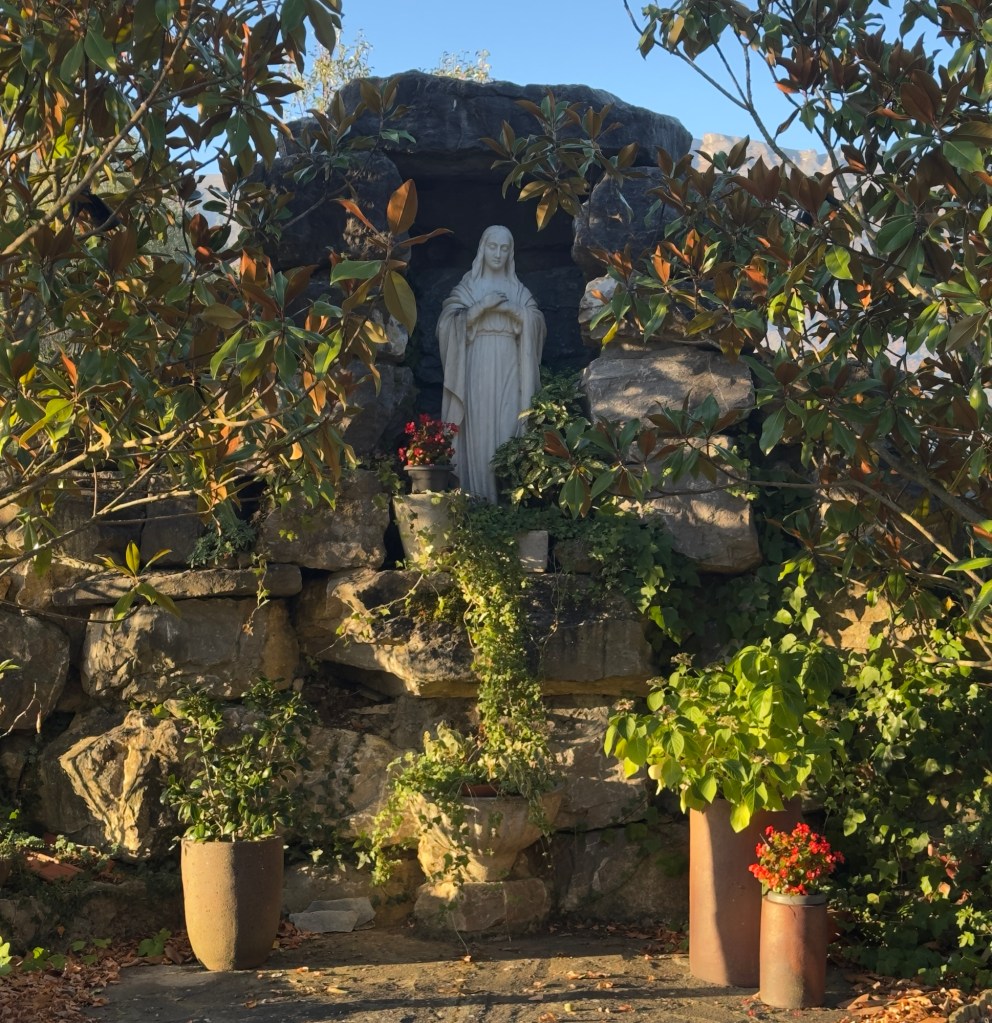
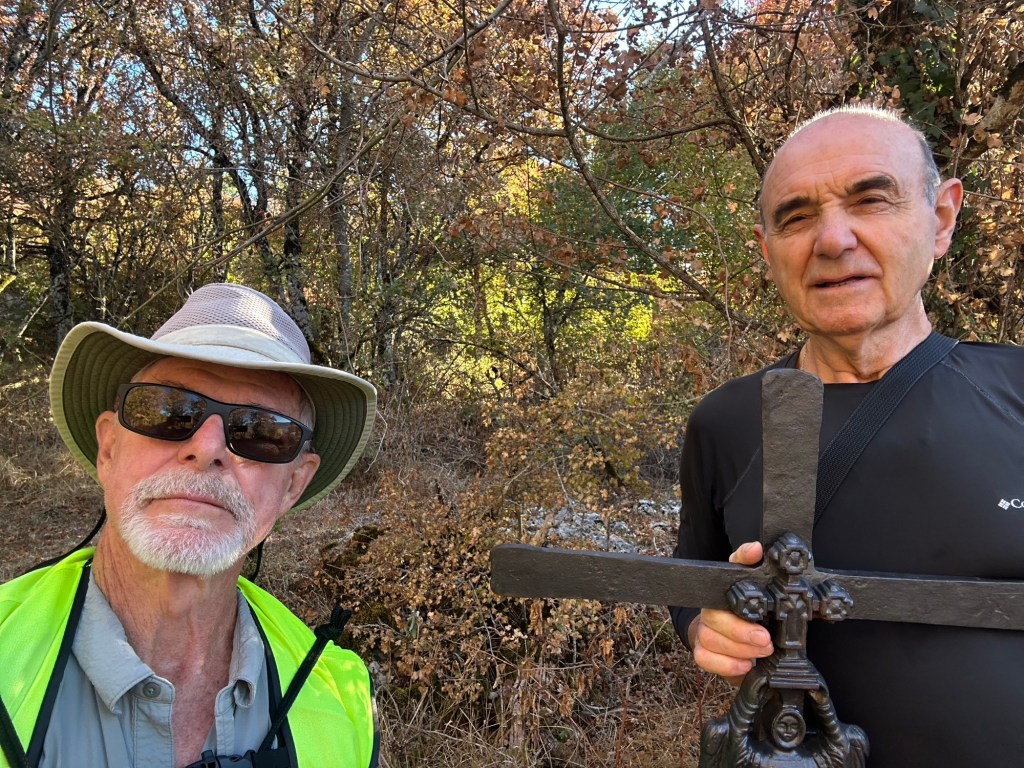
I pulled up my Gaia app and started climbing about a kilometer past the monastery. The trail zig zagged and was difficult to follow. There were plenty of signs that cows were more common than people. About halfway up I met an interesting man coming from the other direction. I was on the lookout for a trail which would take me closer to Arbizu, my ultimate destination, rather than looping all the way back to Zamartze. He told me he was not on that trail, but another variant of the one I was climbing.
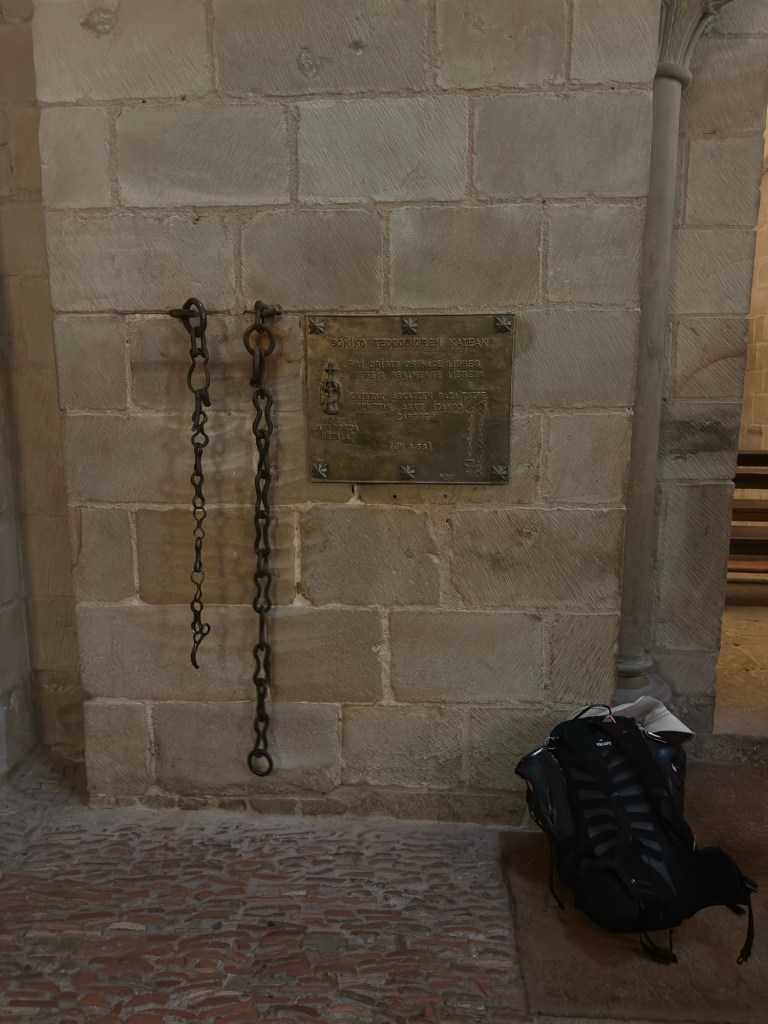
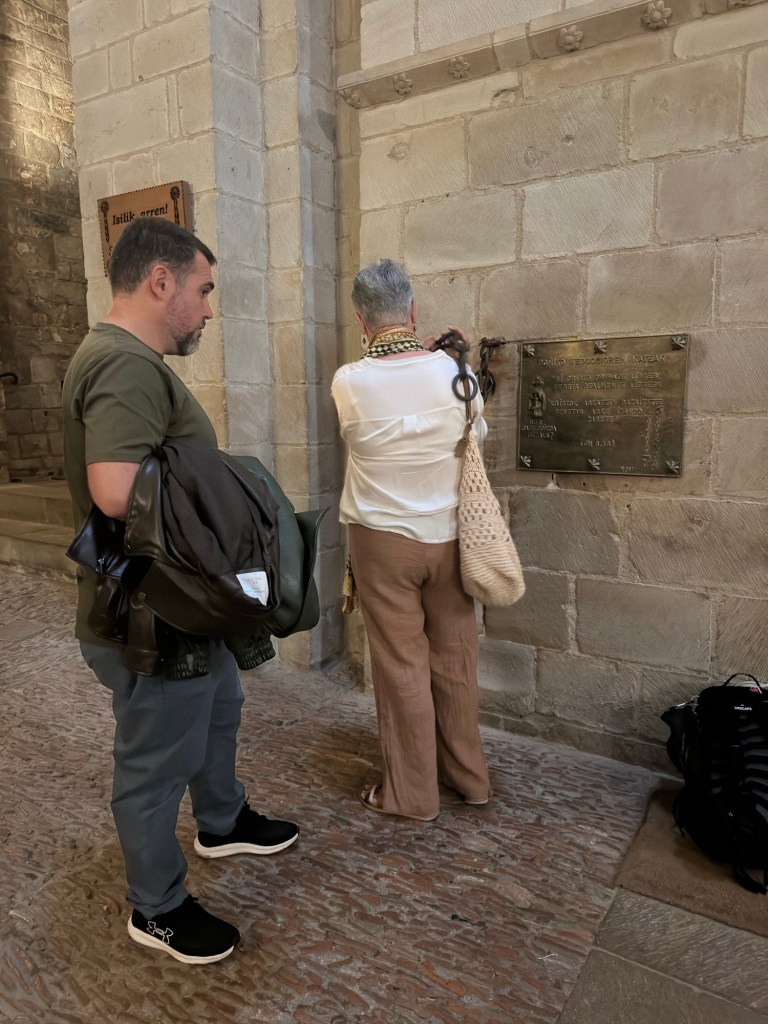
He told me the story of San Miguel de Aralar: Teodosio de Goñi was returning from battle (maybe against the Moors in Spain or from a crusade) when he met a devil diguised as a hermit who told him his wife Constanza had been unfaithful to him. In a rage, he arrives home to find two people on his bed and stabs them to death. Vindicated, he walks outside and sees his wife, returning from church services. He learns the two people he killed were his parents. Devasted, he goes to the bishop to ask forgiveness but the bishop sends him to Rome to see the Pope. The pope tells Teodisio he must return to his home in the Aralar mountains and wear chains until they fall apart. While wandering in the forest of Aralar, he finds a cave with a dragon. Saint Michael appears, defeats the dragon, and frees Teodosio from his chains. Teodosio builds a chapel there, which became the Sanctuary of San Miguel de Aralar. Apparently, Teodosio also went in search of the possessed hermit and with St Michael’s help, exorcised the demon.
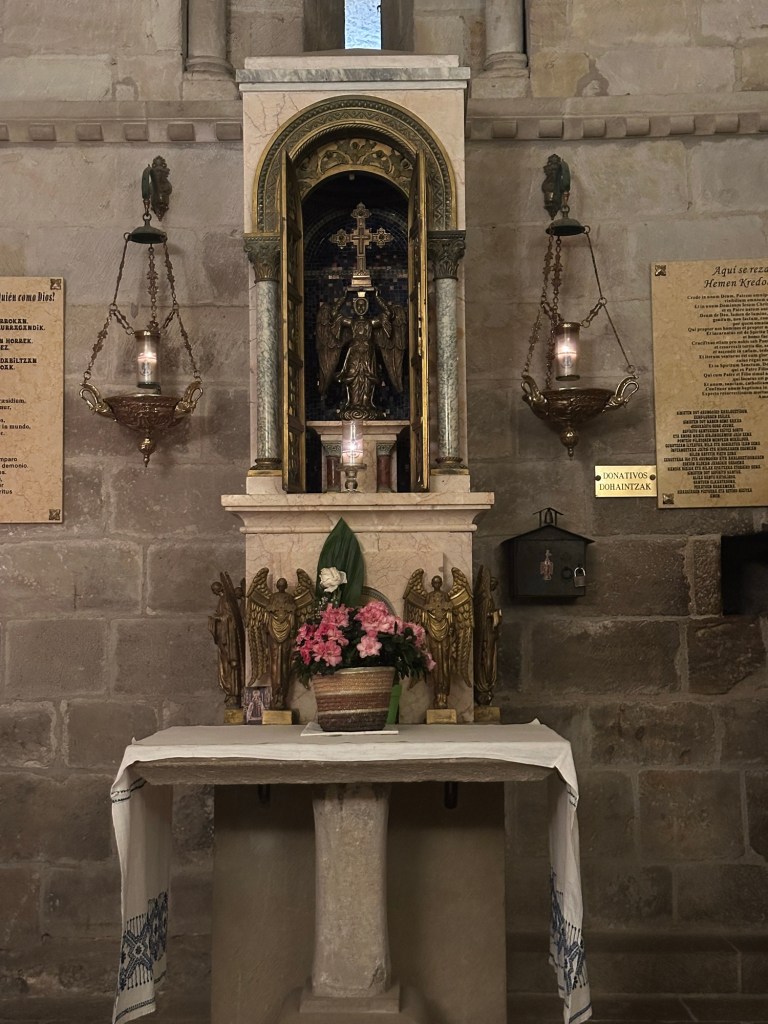
Today a Romanesque church stands on the site where St Michael slayed the dragon. Chains kept there in the sanctuary are traditionally said to be his.
On the way down I took a chance on a fork in the trail, hoping it might be the one that would drop me closer to Arbizu. It turned out to be the right path and it was much better marked than the way up but it seemed forever to descend. Then, I had to walk miles in the sun along the edge of the mountain, running very low on water. After that the trail was blocked by a train overpass that had been closed. I managed to find my way across various fences and the tracks and got back on the trail. Finally I reached my hotel in Arbizu about 5 pm. “By the way,” the propreitess told me, “our kitchen is closed and the bar is closing soon.”
After cleaning up and resting a bit, I set off into the town, looking for a meal. No joy! Everything was closed down. Luckily I still had Pilar’s bocadillo in my backpack and I returned to the hotel to have that for dinner.
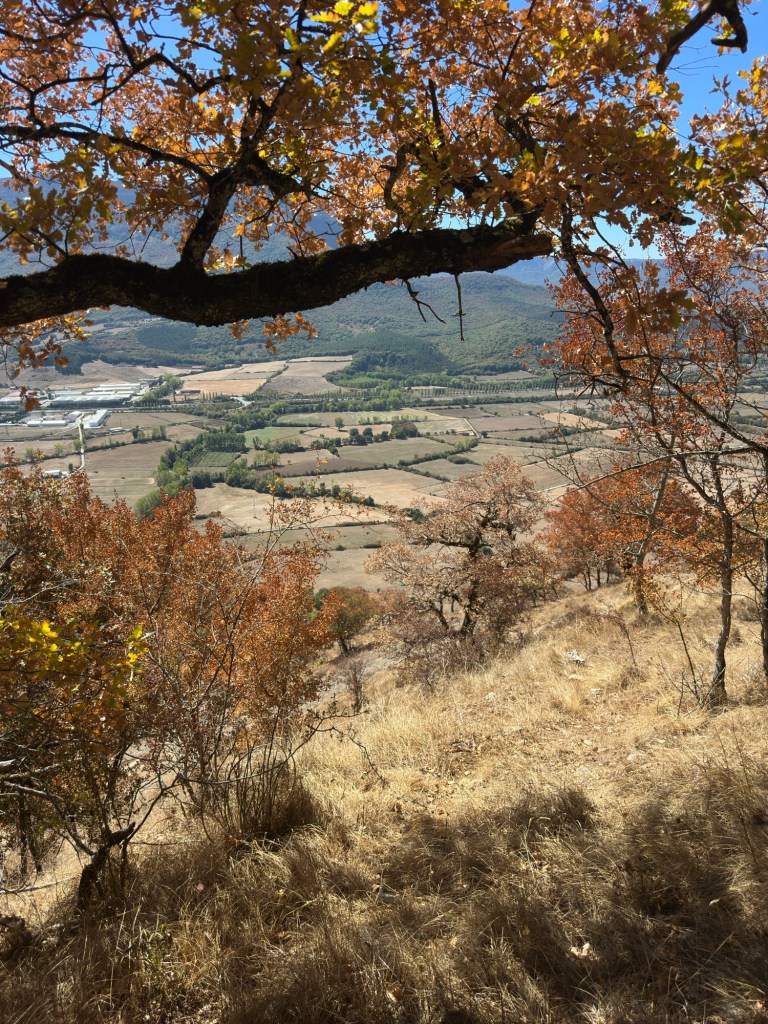


Your writing is so enjoyable. I look forward to the next addition. That last photo deserves to be printed, beautiful 😍 , Laurel
LikeLike
There are so many beautiful sights along the way. The very first day I saw two huge eagles soaring low in the sky, due to the fog. Magnificent birds.
LikeLike
You have determination my friend.
LikeLike
Next two days will be the most challenging from what I hear. No turning back now!
LikeLike