When I arose this morning at the Truck Stop hotel, I had a choice to make: explore the Aizkorri sierra or take a train to Vitoria. My legs and feet won that debate.
I found my hotel in Vitoria about 2 blocks from the train station but still in a rather fashionable part of town. I dropped off my mochila (I love that word which means backpack) and went in search of breakfast. For me, the true test of a great breakfast when on a Camino is cafe con leche and a croissant. Second test would be a cafe con leche and a tortilla, especially if you need something a little more filling, a little more protein-oriented. The common element is the cafe con leche. I remember when Lisa discovered the cafe con leche grande on the Camino Frances and we could really get caffeinated!
I walked around the casco antiguo, or old town, known as the almendra medieval because of its shape. There are many cathedrals and churches and a basilica in and around the old town. The neo-gothic cathedral of Maria Immaculada was started in 1906 and finished in the 1960s.
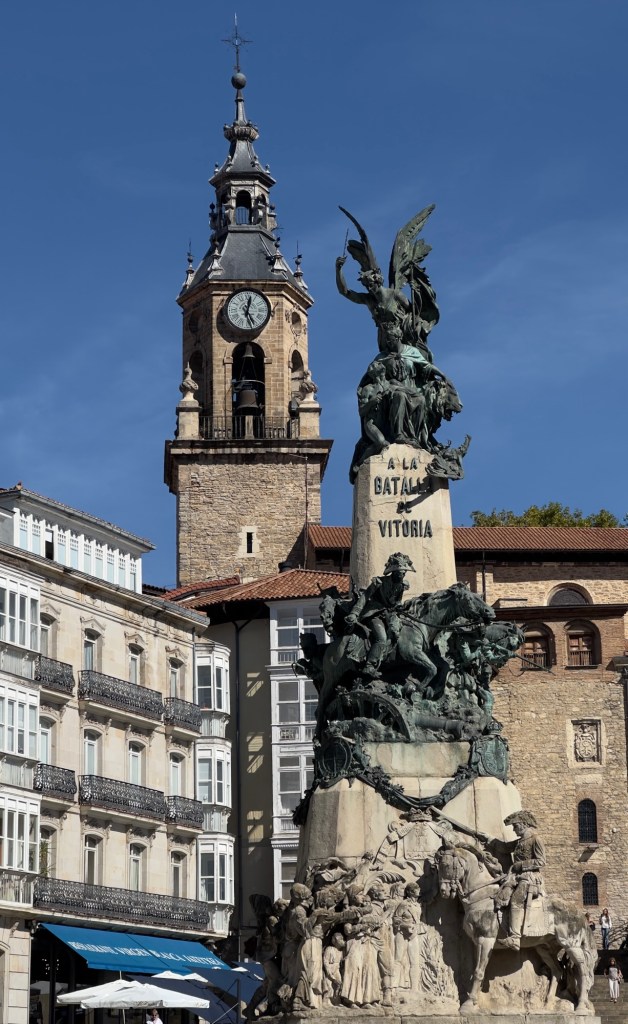
I learned that Vitoria got its name after Wellesley’s defeat of Napoleon in the Peninsular War. By the way, the proper name for this city is Vitoria-Gasteiz (Spanish-Basque), like San Sebastián-Donostia or Pamplona-Iruña.
What else does one do in Vitoria? They say the pintxos here are second only to San Sebastián. So I went on a pintxo crawl.
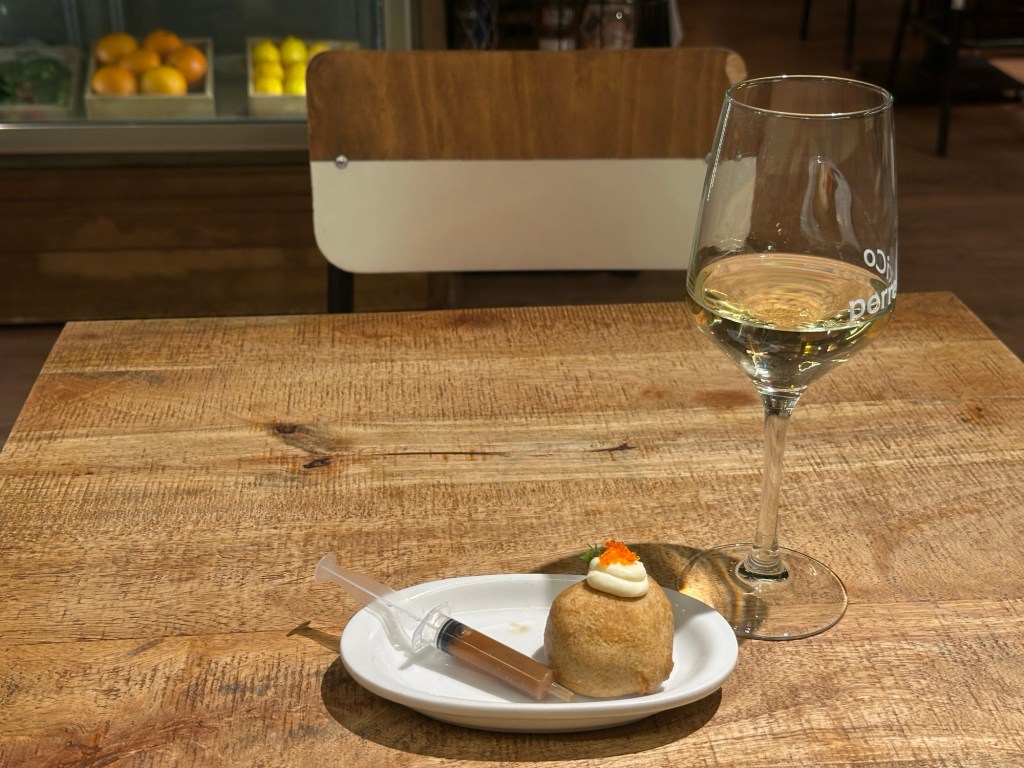
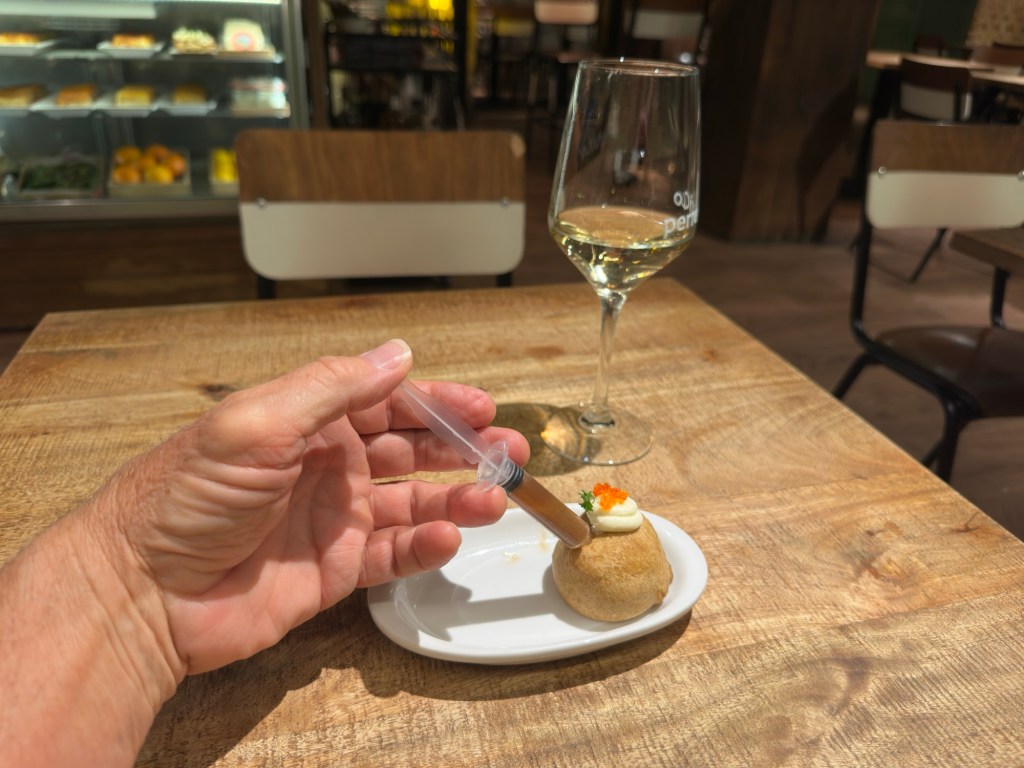
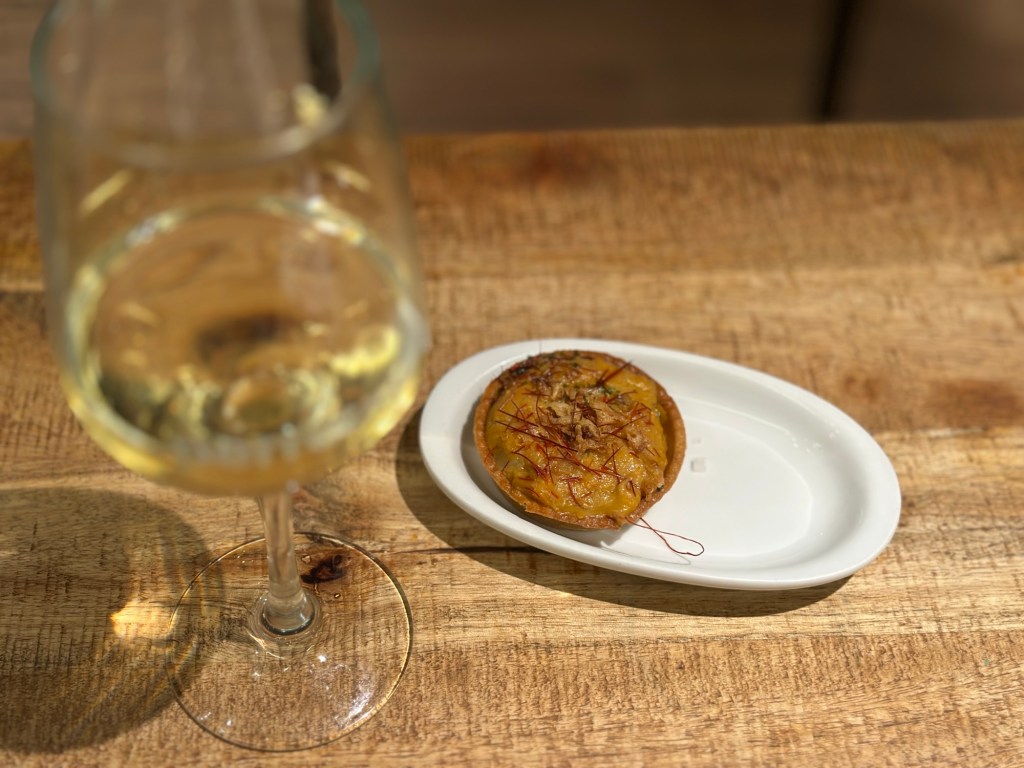
I drank only Txakoli with my pintxos. Because the first glass tasted so good.
gasteiztarra.
Well, it’s off to the next pintxo bar. I

