Day 16. A rather coastal day

You should have received your notice about Day 15. It got stuck in the ether.  Lo siento!

There was no breakfast at The Old Seaman Bed and Breakfast this morning, at least not before 0900, so I guess I should be thankful for the bed. I left Celorio a bit later than I expected but was soon on my way, passing by a couple of beaches and then, just before reaching the A-8, I passed by the monastery of St Antolín.

I passed a cock who clucked at me: Bit of a late start, Peregrino!

Despairing of finding a cafe bar, I stopped to eat a tangerine and a banana for breakfast while overlooking a beach on the A-8. I continued on and bumped into Steve from Montana and Collette from New Zealand. They were walking the wrong way and told me they were heading back to a turn-off onto a coastal trail. “Wanna go with us?” “Sure!” And off we went, at a pace rather faster than my normal plod, to follow a trail Steve had found on Gronze, one of the apps used by peregrinos as well as other hikers. There are many apps for the Camino, including Buen Camino which I use. Peter used Wikiloc to find trails. Steve’s discovery of a coastal trail did not appear on my Buen Camino app until much later in the day’s trek.
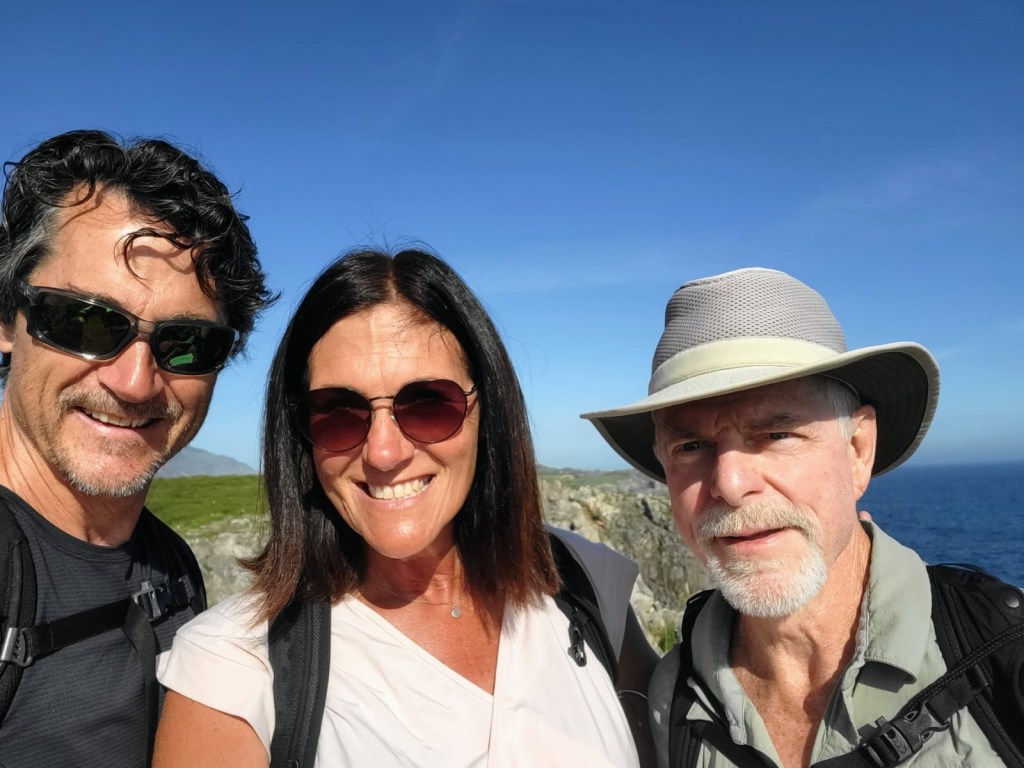
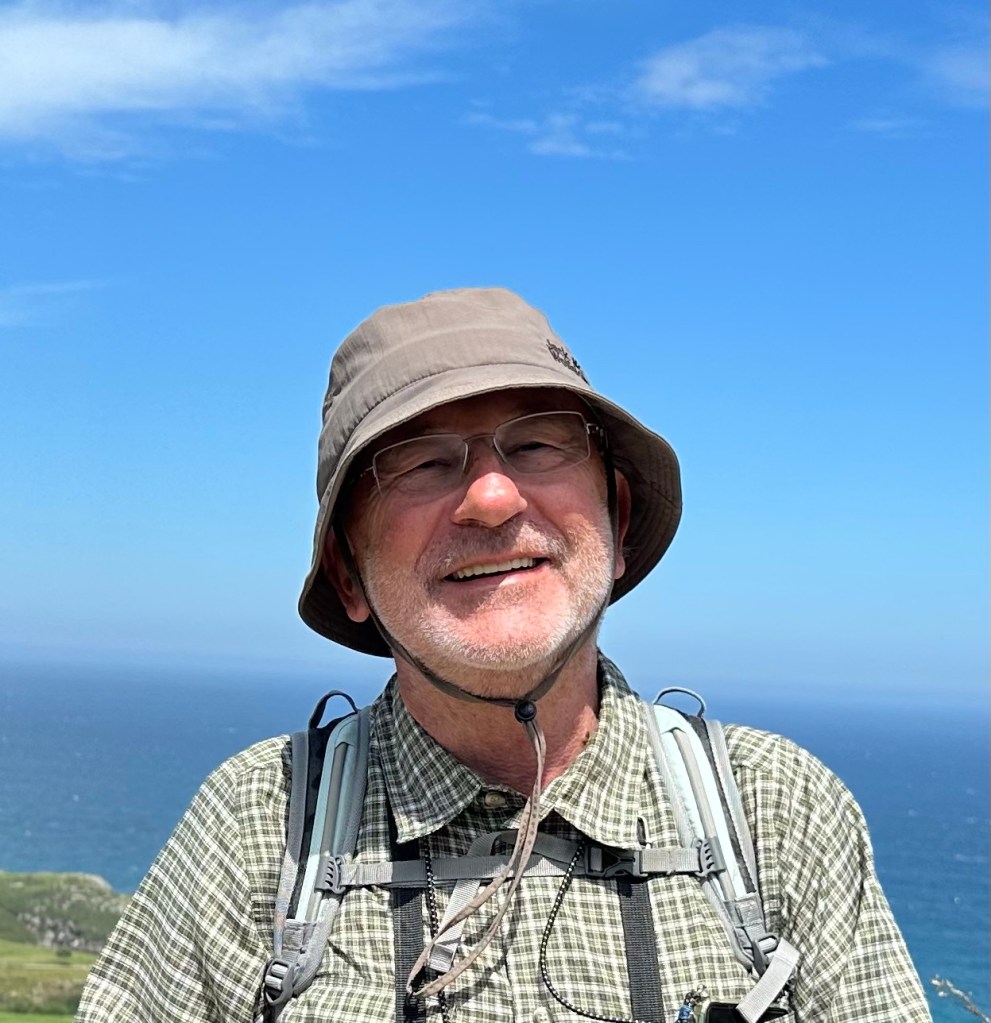
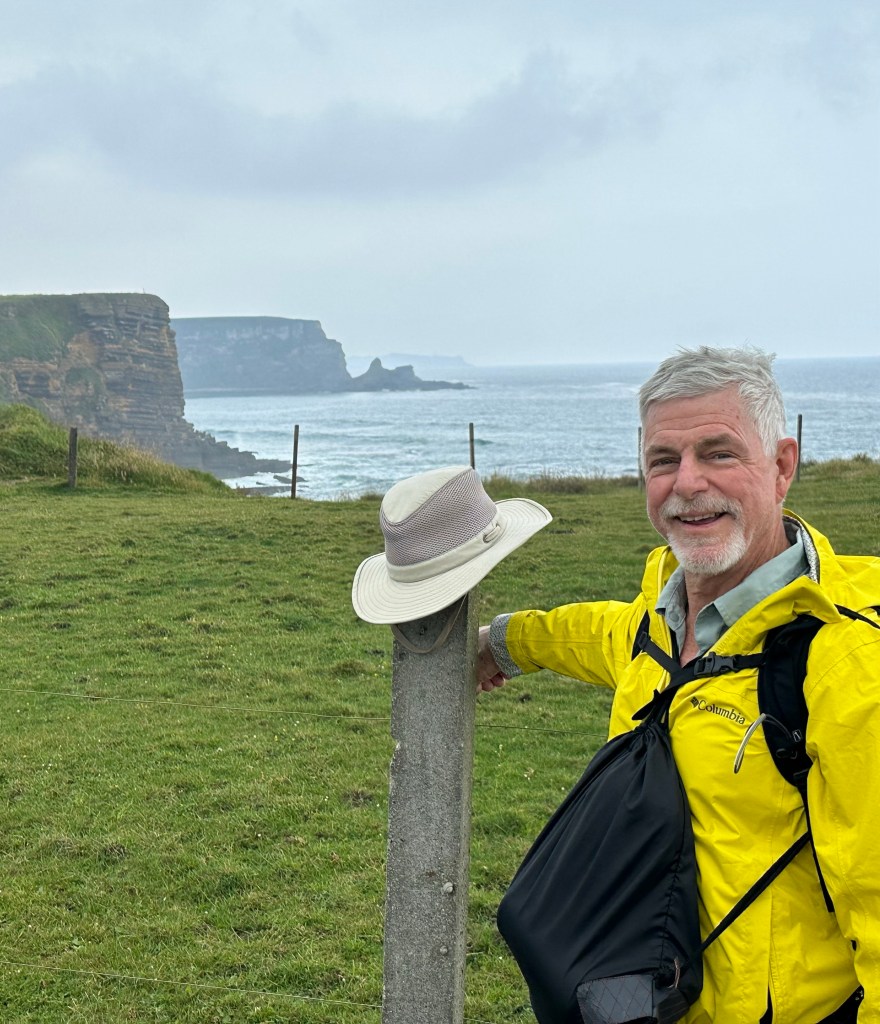
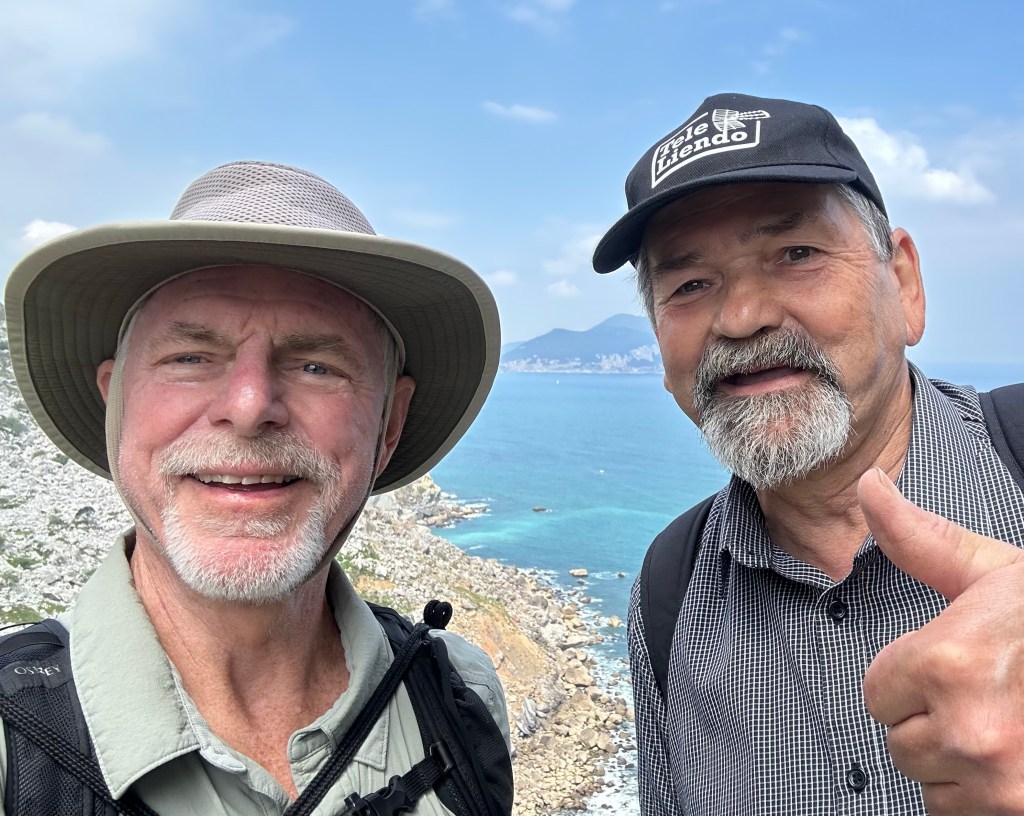
Steve, Collette and yours truly at Playa de Gulpiyuri. Collette headed back to the Camino, while Steve and I continued on the coastal route. I saw Steve at the end of the day and he reported that Collette had returned to the coastal trail. This particular section along the Camino route is mostly asphalted roads and not all that interesting, and on this sunny warm day, the coast was the place to be.

I accompanied Steve to the Playa de las Cuevas. Here we parted ways. I wanted to have another banana and tangerine and take a break. After resting, I headed off to the Bufones de Pria, more blowholes where the air roared from crevasses connected to the sea. As with yesterday, the tide was too low to see the blowholes geysering.

The waves crash upon the rocky cliff walls
The compressed air travels up though holes connected to the sea and sound like a dragon’s roar.
There was a wedding party at the Bufones de Pria. The photographer was asking the bridal couple to take a few steps back.

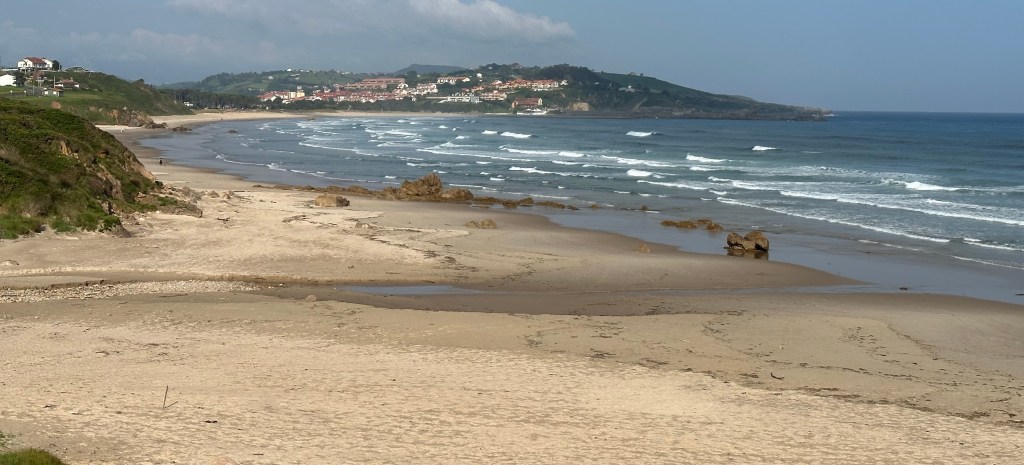
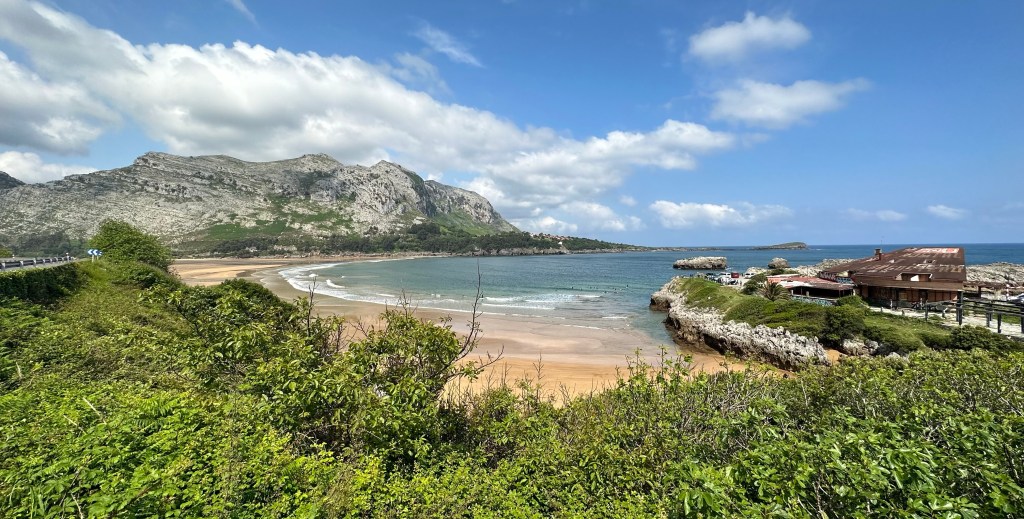
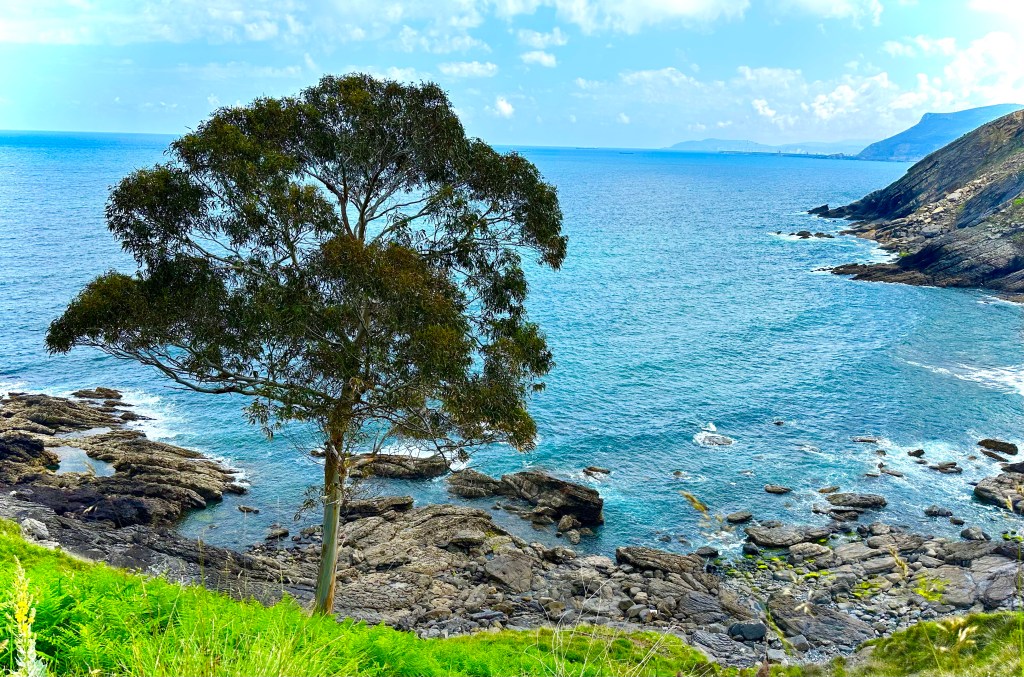
I followed the coast nearly all the way to my destination: Ribadesella, another beach town on the north coast of Spain. Most visitors go to the south coast for more reliable hot summers, but the rugged north coast is beautiful, reminding me of the difference between northern and southern California. I will close out with a couple of the many photos I took.
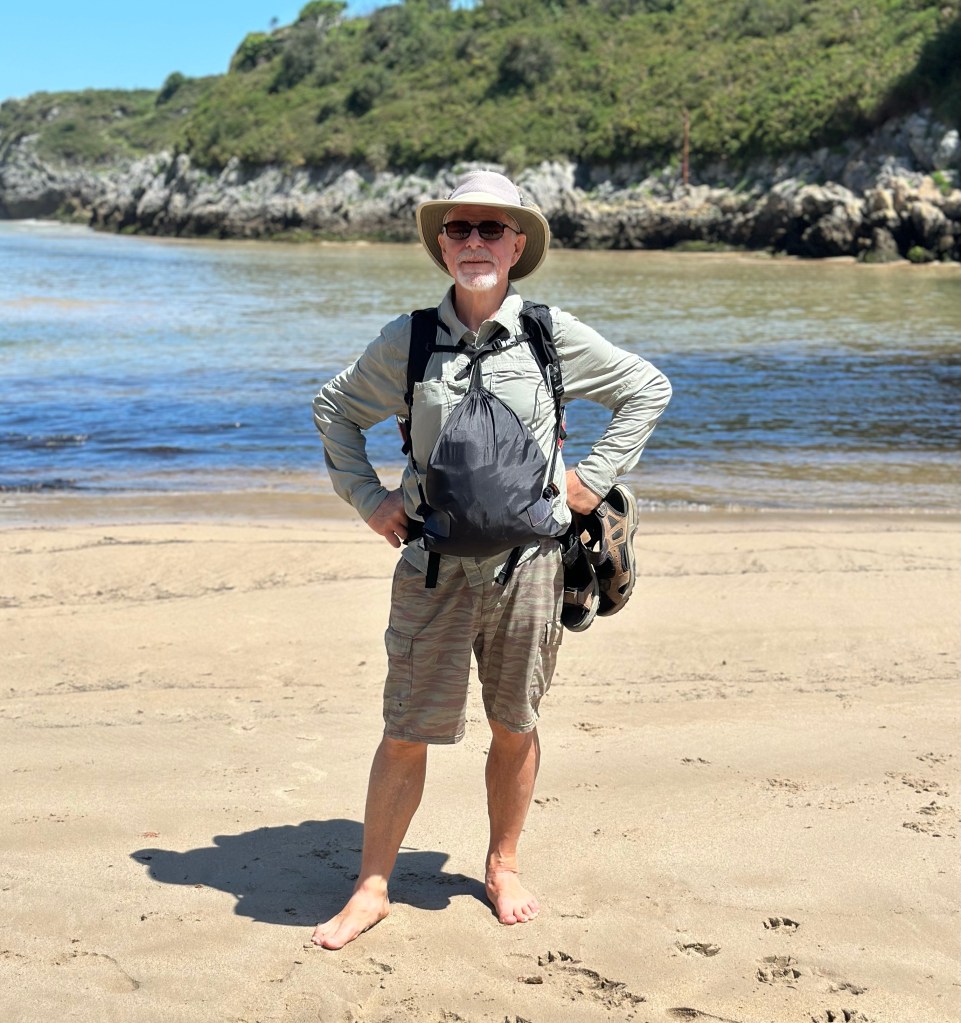
How I spent much of Day 16.

Day 15. Week 3 begins

I left La Franca early this morning and took the E-9 trail as an alternative to the “official” Camino which runs along the country roads. Instead, the E-9 took me along the coast through farmland and cow pastures. Last night’s rain did not make the trail any worse for wear.

With sunrises like this, I will have to get up early every morning.
Moo jong

I walked for about 5 miles before I found a coffee shop. It is high on a bluff overlooking the waves crashing against the rocky cliffs. In fact, I became so mesmerized by the view that I sit here now, sipping on my second cup of coffee, writing this post. It reminds me of the time I went on my first Camino, or escapade, when I was eleven years old: I ran away from home with my reluctant buddy, Doug Varland, and we hiked along the beach for hours before the search parties sent out by frantic parents found us. And just in time because the wolves, unseen but lurking in the hillsides nearby, were starting to take note of us. I was not really running away from anything; I was traveling towards a magical place that existed in my imagination. It is an ever-changing place that I am still journeying towards.

Mesmerizing?

The next highlight along the way were the Bufones, or blowholes. At high tide, they say water spouts can spray up to 20 meters high. I went by there at low-ish tide. There was only a faint spray of mist, but it sounded like a freight train as air blasted out of the rocky gullies. I stayed on the E-9 until just before Llanes when I lost the trail and ended up on a bicycle trail. Just as well because it was there I met Ziggy, a 73 year old German who told me he was doing his last Camino. Ten years earlier, a job that kept him desk-bound, along with smoking and drinking too much left him overweight and partially paralyzed in his legs. He started walking through the forests near his home and worked up enough strength and stamina that he tried the Camino Francés. He has since walked all the Caminos, including some more than once, including the Norte, on which he was making his farewell tour. “Everything has changed,” he told me. “The routes, the buildings, the people. Even our beliefs have changed.” I wished him well. I know he was hoping this final run would never end.

Ziggy: many Camino memories. I asked which Camino had the best memories for him. He conceded that all were different, but some were more physical or more spiritual or more social than the others.

Llanes, and Po, the following village, were pretty hip places with chic bars and restaurants catering to well-heeled tourists. I was hoping Celorio, where I am spending the night at “The Old Seaman” inn, would be similar. It was not to be. But there is a bar next door and I am having beer and a mix of peanuts and corn nuts for dinner.

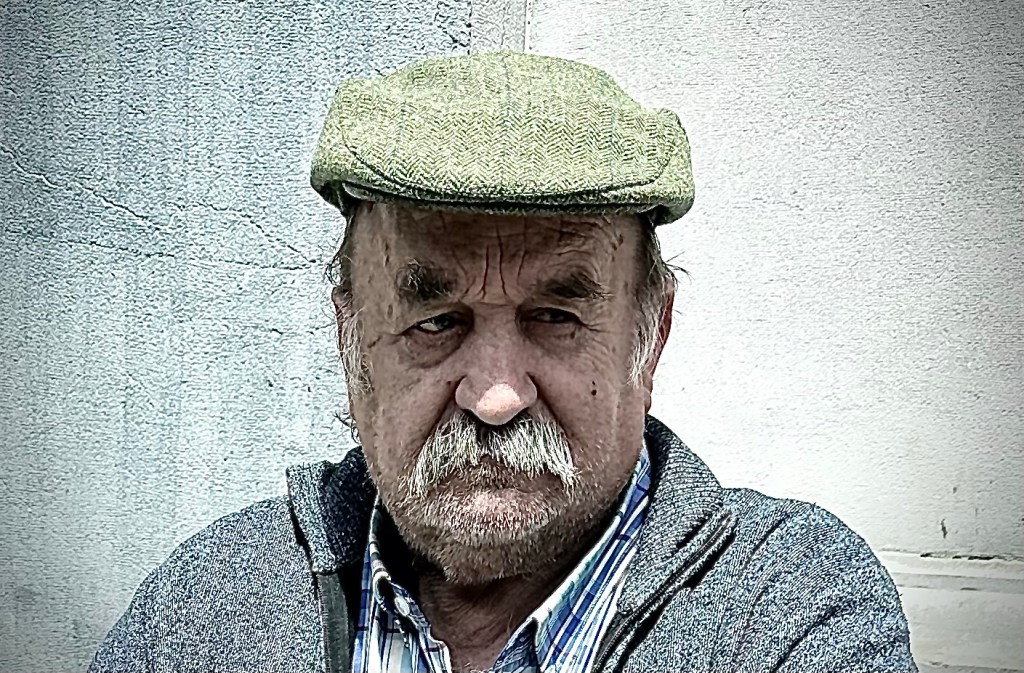
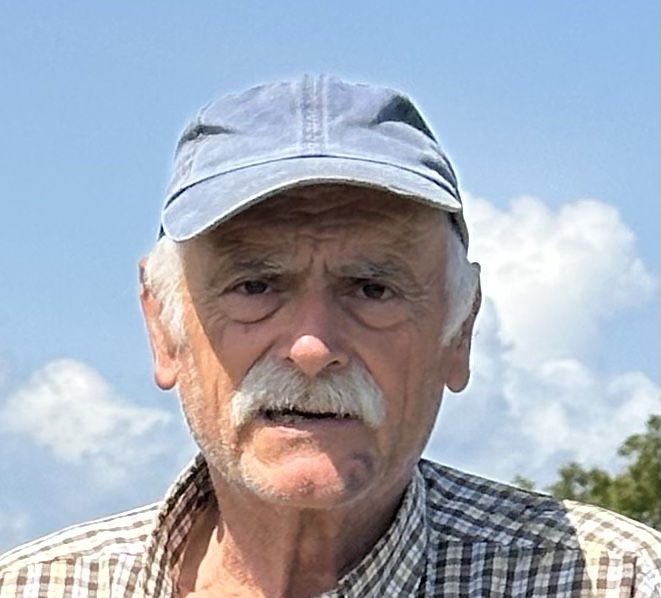
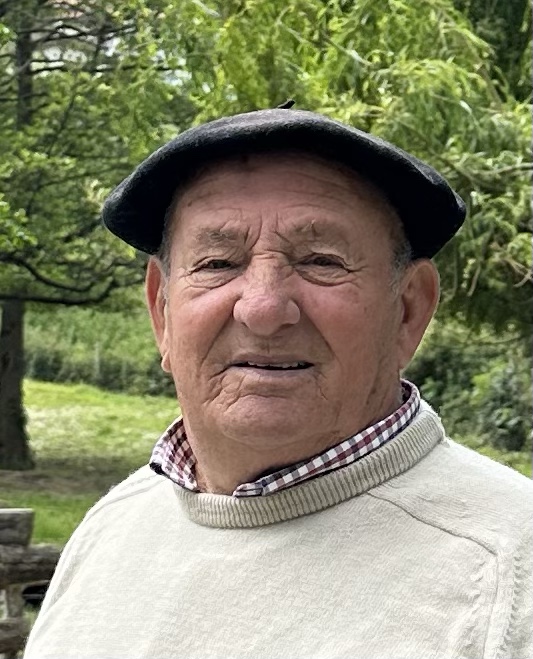
I met this character on the way out of Llanes. When I told him I was from Texas he said that most Texans sit in bars drinking tequila until someone who looks like him comes in and shoots the place up.

Day 14. Changing Gears

I am sitting in my little casita, a rural cabin in the tiny crossroad of La Franca, but I might as well be in Thailand or Singapore during a tropical downpour kicked off with lightning and thunder. I am glad I am not out hiking in the deluge, but it is a good sign. This is, after all, the end of Week 2 on the Camino, and a time for changing gears. First, my walking companion Peter is by now in safe harbor in Solana Beach. Walking solo puts one in a very different mindset. For example, I no longer book rooms days ahead, but instead the day of. I have more time to myself, which I am putting into the mental preparation for the Primitivo. The Norte has ascents of 300-500 meters. The Primitivo has ascents of 600-900 meters. The Norte is along the coast with plenty of lodging, food and other facilities. The Primitivo has a few alberges strategically located every 15 or so miles. But I paint a bleak picture. It will be challenging but exhilarating. The ascents and especially the descents will be tough, but the vistas and the people will be amazing.

The Spaniards say March and May exchanged places. March was hot and dry: May has been cold and very wet. I have been lucky to miss the worst of the weather.

Before continuing, it is time for congratulations: to my sister Colleen whose birthday is May 15 and to Jack whose birthday is tomorrow, May 26. And to all you others who may be celebrating: be safe and responsible. Okay, have a little fun, too!

Today I had an earlier start and the arrows led me through nice countryside and eventually to the coast at Oyambre beach, then inland for a bit, until I got close to San Vicente de La Barquera. There, a long and wide sandy beach opened up. I notice ed a pilgrim leave the waymarked trail and go down to the beach and remove his sandals. It was Oliver, a German from near Düsseldorf who smokes too much, but I followed go down, took off my shoes and socks and walked half a mile along the beach.

It felt good to dig my toes onto the sand and give my feet a cold batch in the Bay of Biscay.

We walked into San Vicente and spotted the bus station. Bus stations always have good coffee so we stopped for a while. Oliver went into town in search of smokes while I worked on where to spend the night. Then it was back on the trail which led through some nice forested areas.

The sun was shining the whole day and after an 18-mile day, I reached my casita in La Franca. The last portion of the trail I hiked with a Frenchman who spoke English but no Spanish. He was with an American who was trying to learn Spanish. So they made an interesting pair. The American is on a one year visa to live in Spain, where he plans to move. He is checking out all the different regions of Spain

This fellow is a farmer I stopped and talked with. He was on his way to till a plot for planting corn and beans. He explained how he prepared the soil. Yesterday, I saw another farmer who was planting seedlings. “Que sembras?” “Lechuga. Mucho lechuga”. “Mucha ensalada!”.
Picture of George, the Swiss who lives in London, taken several days ago. His sketch of the rocks was pretty good!

Day 14. Changing Gears

I am sitting in my little casita, a rural cabin in the tiny crossroad of La Franca, but I might as well be in Thailand or Singapore during a tropical downpour kicked off with lightning and thunder. I am glad I am not out hiking in the deluge, but it is a good sign. This is, after all, the end of Week 2 on the Camino, and a time for changing gears. First, my walking companion Peter is by now in safe harbor in Solana Beach. Walking solo puts one in a very different mindset. For example, I no longer book rooms days ahead, but instead the day of. I have more time to myself, which I am putting into the mental preparation for the Primitivo. The Norte has ascents of 300-500 meters. The Primitivo has ascents of 600-900 meters. The Norte is along the coast with plenty of lodging, food and other facilities. The Primitivo has a few alberges strategically located every 15 or so miles. But I paint a bleak picture. It will be challenging but exhilarating. The ascents and especially the descents will be tough, but the vistas and the people will be amazing.

The Spaniards say March and May exchanged places. March was hot and dry: May has been cold and very wet. I have been lucky to miss the worst of the weather.

Before continuing, it is time for congratulations: to my sister Colleen whose birthday is May 15 and to Jack whose birthday is tomorrow, May 26. And to all you others who may be celebrating: be safe and responsible. Okay, have a little fun, too!

Today I had an earlier start and the arrows led me through nice countryside and eventually to the coast at Oyambre beach, then inland for a bit, until I got close to San Vicente de La Barquera. There, a long and wide sandy beach opened up. I notice ed a pilgrim leave the waymarked trail and go down to the beach and remove his sandals. It was Oliver, a German from near Düsseldorf who smokes too much, but I followed go down, took off my shoes and socks and walked half a mile along the beach.

It felt good to dig my toes onto the sand and give my feet a cold batch in the Bay of Biscay.

We walked into San Vicente and spotted the bus station. Bus stations always have good coffee so we stopped for a while. Oliver went into town in search of smokes while I worked on where to spend the night. Then it was back on the trail which led through some nice forested areas.

The sun was shining the whole day and after an 18-mile day, I reached my casita in La Franca. The last portion of the trail I hiked with a Frenchman who spoke English but no Spanish. He was with an American who was trying to learn Spanish. So they made an interesting pair. The American is on a one year visa to live in Spain, where he plans to move. He is checking out all the different regions of Spain

This fellow is a farmer I stopped and talked with. He was on his way to till a plot for planting corn and beans. He explained how he prepared the soil. Yesterday, I saw another farmer who was planting seedlings. “Que sembras?” “Lechuga. Mucho lechuga”. “Mucha ensalada!”.
Picture of George, the Swiss who lives in London, taken several days ago. His sketch of the rocks was pretty good!

Day 13. Double scallop day

When Paula and I lived in Madrid we were privileged to visit the cave of Altamira near Santillana del Mar. I believe it was Kamal Osman who was able to get the tickets which even back then were very difficult to come by; today the cave is closed to the public for reasons of conservation of the paintings. The cave is known for the drawings of wildlife and human hands. The earliest paintings are about 35,000 years old.

No, I did not sneak into the cave to take this iconic picture

Today I took a bus from Santander to Santillana, not to see the cave (or the replica of the cave which is open to visitors), but to avoid the industrial and urban areas on the way out. There is a coastal variant but that would have been a 20-mile walk with 10 more to get to Santillana del Mar. With the rain threatening, I opted for the bus and arrived in Santillana about 11:30. As I was to learn later, I missed some heavy rainfall by a couple hours.

Paula, Lisa, John and I visited Santillana last year on our eastward drive but I had no time to linger. I found the yellow arrows and headed towards Comillas, about 17 miles away. I met a young man from Hong Kong. He told me things were sort of back to normal in his country. You could criticize the government as long as you kept it off the internet and as long as you did not want a government job. If you were famous, like Jack Mah, you were also likely to get into trouble for criticizing the government. In our country, I told him, half the people criticize the president and his party while the other half criticize the party not in power.

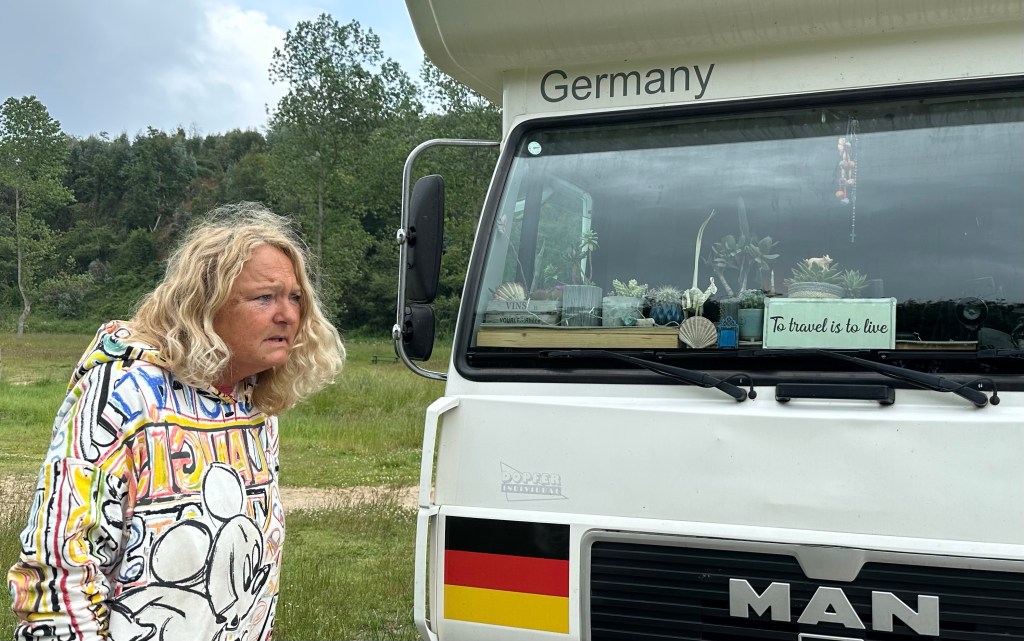
The trail led close to the coast but there were no cliff side paths today. At one point, I saw a large truck with the names of cities from all over Europe and the Middle East. I knocked on the door and Antje, or Ann, a German woman, answered. She had been traveling for years in her home on wheels. She gave me a scallop shell.

To travel is to live.

I made it to Comillas about 5:30, had a shower and went off in search of a beer, which I found and shared with a couple of Scots, Dave and Callum. They are the ones who told me they had hiked 3 out of 4 hours in the rain, along the same route I had taken a couple hours later. I departed in search Gaudí’s Capricho but found it overrun with schoolchildren so I returned to the plaza in search of a restaurant. I found the Kimera, and along came Dave and Callum. The owner was Antonio who served us what he considered to be a great Albariño which was very crisp with notes of honeydew and a red blend called El Regajal from Aranjuez. Julian, the chef served up some great meals for us. I had lentils with maigret de canard (yes, unusual pairing but it worked) and grilled red mullet. The Scots both had the cod, grilled them baked, as their mains.

Antonio and the foodies
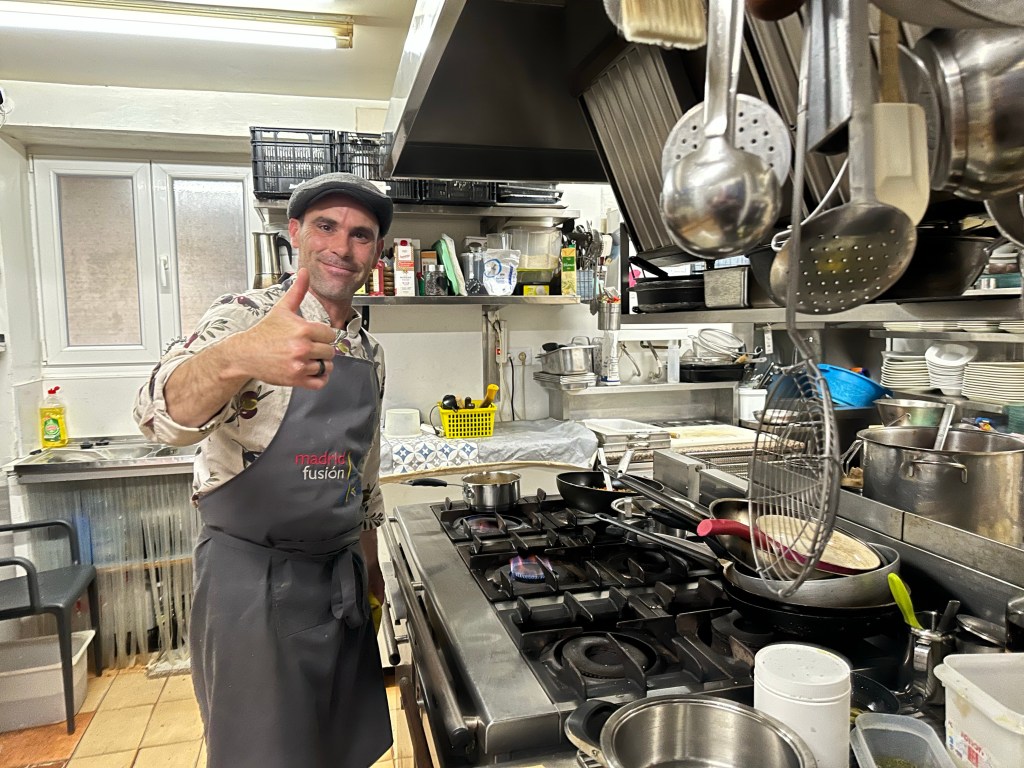
El jefe Julián preparing to create in his kitchen. He gets fresh fish from the docks every morning, meat from a farmer friend and grows much of his own veggies and herbs. He presented me and the Scots with scallop shells. That was two shells in one day for me!

Day 12. Gray Day

The skies and the weather forecasts were threatening rain so we geared up with our rain kit for our 10 mile hike to Santander. We started off from Guemes on country roads which led back to the coast. The skies were gray but still no rain.

It was bracing to be back on the coast with more breathtaking views. This was the first time I wore my new rain jacket. I felt as long as I wore it, the rain would stay away.

We walked along the cliff’s edge, stopping now and then to admire the views unfolding below us: crashing waves upon the rocks, interesting tide pools cut from eons of erosion, and crescent beaches catching the swells and transforming them into evenly breaking waves for the surfers who had come from all over Europe.

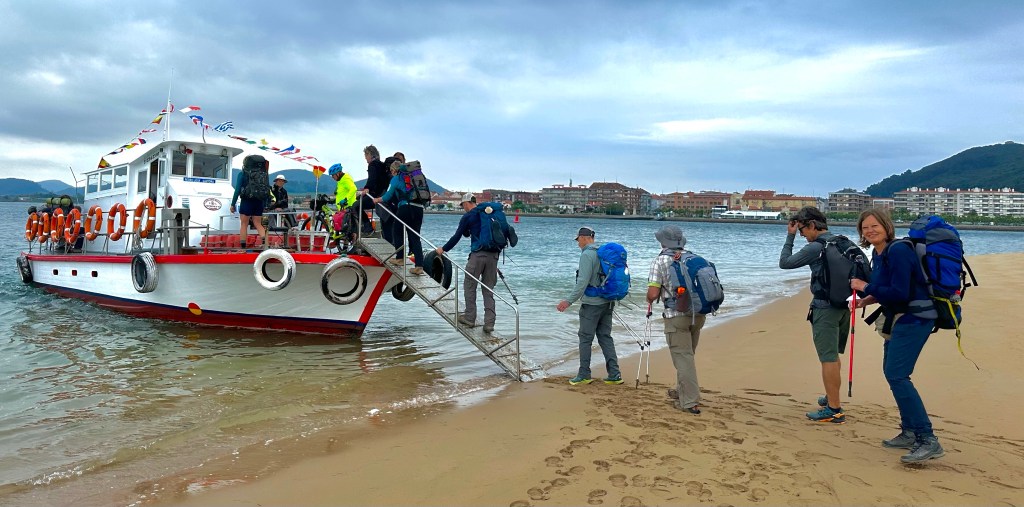
Finally the path led us down onto a very long sandy beach at the end of which was Somo, the village where you catch the ferry to Santander. Just as we were walking past the Solymar bar in Somo, the skies opened up with euro-sized rain drops. We popped into the Solymar for second breakfast and when we finished the rain had stopped. We made our way down to the end of the street just as the ferry arrived. This was our third ferry ride of the trip. This one took us to Santander.

Along Somo’s beach I stopped to photograph some of the interesting rocks that jut forth from the sand.

Arriving in Santander was a bit of a bittersweet moment. This was the final destination along the Camino for Peter. We visited some tapas bars, the Cathedral and a Pre-history museum before finally saying adios. Peter will fly back to California tomorrow and I will continue on the Norte to Oviedo, and then the Primitivo to Santiago de Compostela.

Peter developed a congenial Camino Family during his walk from Irun to Santander.

Day 11. La bruma nos consuma

It was a 45 minute walk from our hotel down the streets of Laredo to catch the ferry to Santoña. All the passengers were pilgrims including a couple on bicycles. Once on the other side we found a coffee bar and had our breakfast, along with most of the pilgrims.

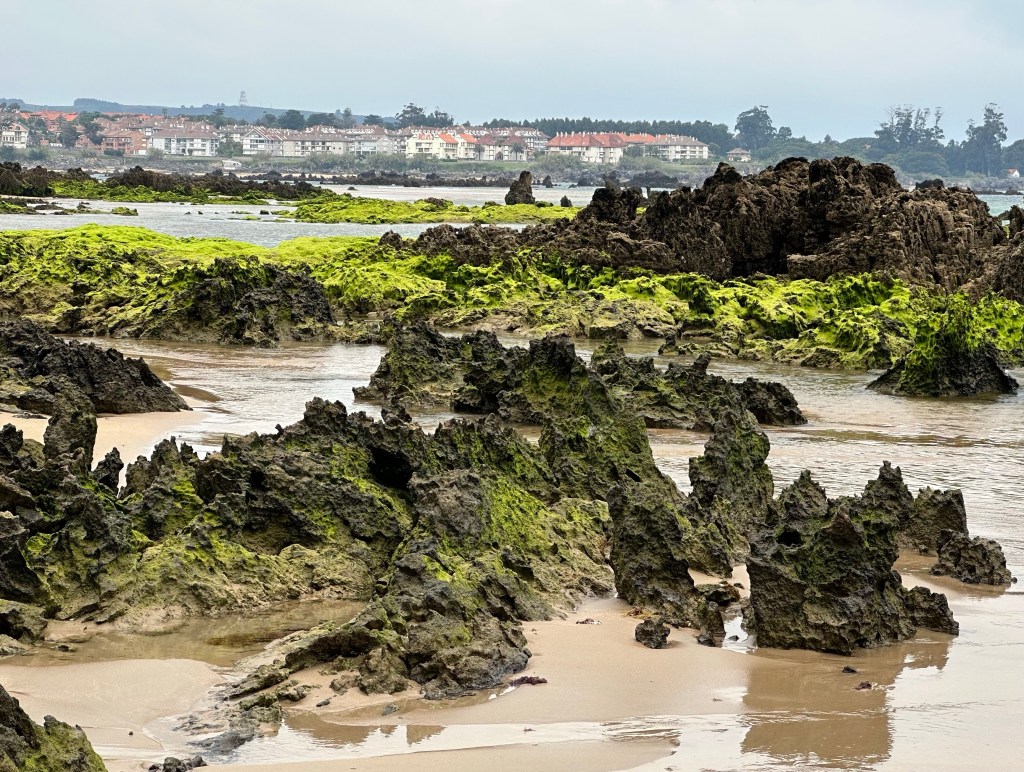
We left Santoña passing by a prison on the beach — this was no Devil’s Island but rather the place I want to be sent when they finally catch up with me. We headed up and over a promontory along a rocky trail which deposited us on the beach leading to Najos, another seaside village catering to tourists. It was low tide, exposing outcrops of limestone covered in black alga and green moss.

We pushed on past Najos after being thwarted in our efforts to grab a meal — we were mistaken for rich tourists willing to pay 10 € for a bowl of soup. In the distance, dark clouds were heading our way. Soon a persistent mist enveloped is. We donned rain gear and pressed on to San Miguel where we found a local coffee shop and ducked under cover for a bite. The rain temporarily stopped and we continued on towards Guemes, our destination for the night. Soon the mist caught us again and became heavier— not quite rain, but enough to leave us soaking by the time we arrived at our posada, the Angel de La Guarda. We checked in dripping wet and headed for our rooms, a shower, and dry clothes.

The innkeeper assured us the Bar Luis was open for meals but we found it was closed for descanso on Mondays. We noticed the parking lot of the church across the street was packed full and went over to investigate. It turned out to be a crowded funeral mass for a man who certainly had a lot of friends.

Next door to the church was another eating establishment and we entered hoping for a bite to eat. The kitchen would not open for another two hours, we were told, so we grabbed a glass of Rioja and joined a group from London, consisting of three adventurous sisters and the husband of one of them. They were not doing the full Camino. They had started a few days before and would be heading back to London from Santander. They were also waiting for dinner and we had an interesting evening with them. It turned out they were staying at the same posada so we will meet them again for breakfast. It will be a planning session to see if we can all get to Santander without getting wet.

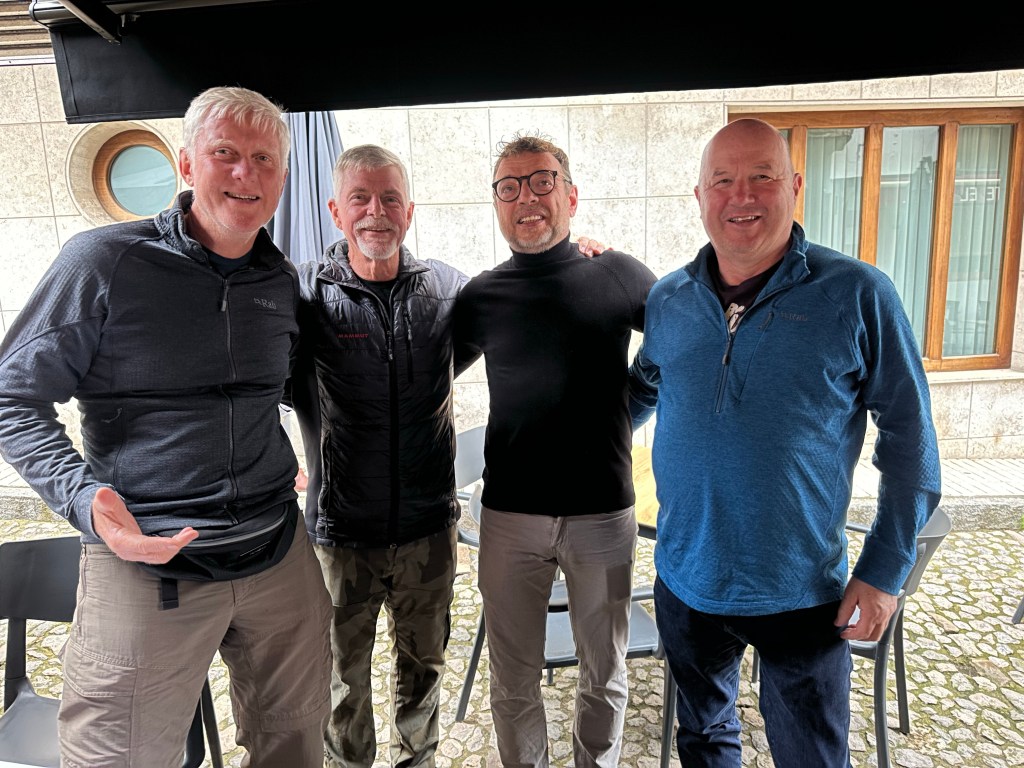
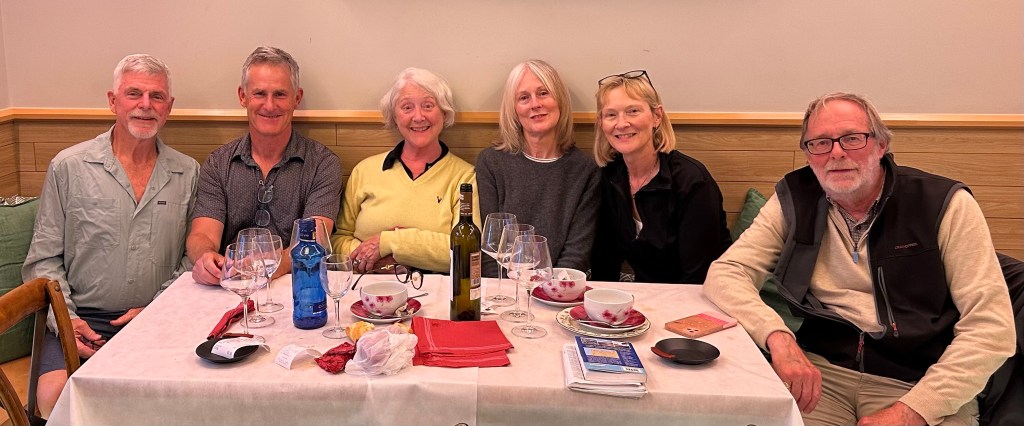
Peter and I with our Camino friends from London: Marilyn, Caroline, Sarah and Chris. Chris is another retired oilman.

By the way, Rafa, the YouTuber I met yesterday has posted his video. You can catch his interview with me at time stamp 21:40. (Search TeleLiendo on YouTube and look for his latest video, titled Camino de Santiago de Liendo…). It will give you an idea of walking the Camino. And give him a “like”; he would be thrilled.

Day 10.

Cantabria is nestled between Euskadi, the Basque country, and Asturias on the north coast of Spain and is named after the Cantabri, a Celtic people who settled the region during the Iron Age more than 1000 years BC. They fought as mercenaries for the Carthaginians against Rome during the second Punic Wars which ended about 20 BC. After the fall of Rome four hundred years later, the Cantabri fell under the rule of the Visigoths. On 714, the Moors conquered that part of Cantabria, forcing them to unite with their Asturiana neighbors. Cantabria is the richest region in the world for archaeological sites from the Upper Paleolithic period (Cro-Magnons), ranging from 50,000 to 10,000 years ago. The most significant site for cave paintings is that in the cave of Altamira, dating from about 37,000 BCE and declared World Heritage Sites by UNESCO, along with nine other Cantabrian caves. (Thanks to Eupedia for this history lesson. Hope you found it of interest.)

Today, I walked through some of the beautiful farming and horse country of Cantabria, and along some incredible coastal cliffs where the mountains meet the sea.

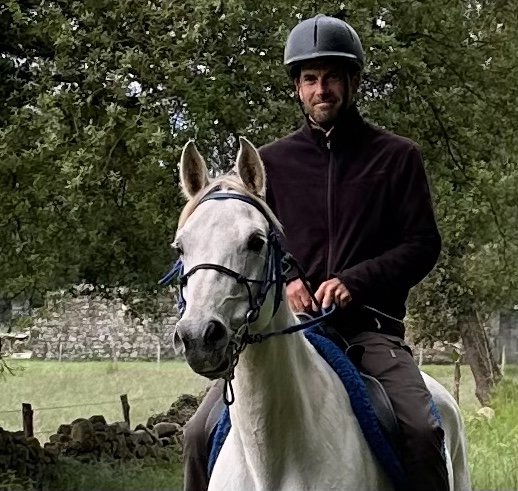
The first person I saw this morning was a horseman out for a ride on his arab.
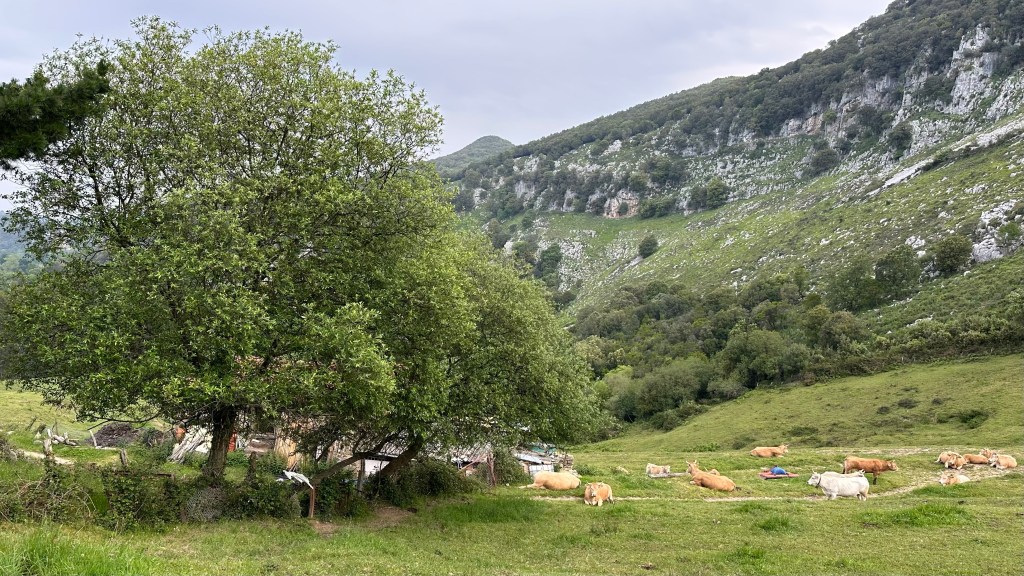
The valleys between the rocky limestone mountains make good cattle country. Sheep and goats graze the mountainsides.
After about 2 hours of hiking, I came across Liendo. Many young people who left the countryside for the cities like Bilbao back in the 80s are returning and building country homes.
A friendly descendant of the Cantabri was walking his dogs and told me where I could find a coffee. Many people have dogs around here.
Back on the coast, I had an apple and the last of my Trader Joe’s almonds for lunch.
After lunch, I met Rafa who was keen to show me the sights at the top of the mountain, including an old mine that collapsed several years ago after 100 years or so of disuse. He has a YouTube channel called TeleLiendo.

I arrived in Laredo and checked into the Hotel Cosmopol. I decided to wait for Peter who had a much longer walk than I did at the Pescador, a seafood restaurant just up the street. By the time he arrived, I had put away a plate of anchovies in olive oil and a bowl of steaming clams a la marinera.

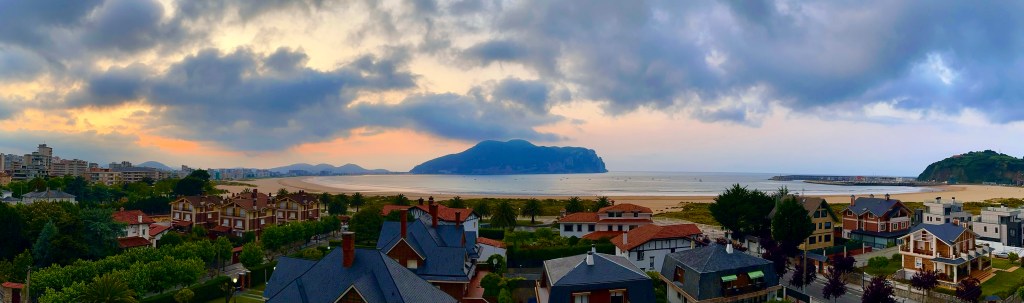
View from hotel balcony at about sunset.

Day 9. A Peaceful Moment

I hiked eleven miles today, a leisurely walk along the coast and then a slightly more difficult climb inland to La Posada de Fernanda in Rio Seco where I am staying tonight. The trail was well marked, though I do keep my Buen Camino app handy which includes my gps position on satellite view map.

My walk today along the Camino marked in yellow. I am a blue dot covered by the Pension symbol (P) in lower left. Do you ever feel like a blue dot?

About 5 km out of Castro-Urdiales, just outside Cerdigo, I came across a church that was actually open. Most of them are locked up tighter than the pearly gates, so I happily entered. I sat in a pew towards the back and unburdened myself from my day bag and backpack. There was a woman tidying up the church. “Romanesque,” she told me. “From the 12th century.” She pointed out the original walls and arches of the church. I nodded, then closed my eyes. A peaceful feeling came over me and I sat there relaxing in it. “My peace I give to you” came to mind. Such a gift! If only I could give it! Afterward, being in that mood, I looked up today’s gospel and the last words continued to ring softly through my mind as I continued on my way, transformed a bit: “From peace I came into the world; now I leave the world and return to peace.”
Between Cerdigo and Islares, on a path towards the rocky coast, I came upon a most beautiful and enchanted path. The dark branches of the trees arched over to form a passageway towards a blue light, which turned out to be the ocean.

I swear, I was not doing drugs!
At one point along the craggy coast, I stopped to rest with some friends I met.
Just another beautiful beach!

Peace be with you all.

Day 8: Start of Week 2!

Peter and I worked out our plans for the next few days and celebrated with a dinner of mussel curry, ox-tail risotto and lomo Ibérico with Jack Daniel’s bbq sauce. Peter will take one of the several options for leaving Bilbao and walk to Pobeña. I decided to take the metro train to Portulagete and avoid some of the urban and industrial sprawl of this buoyant city. We will meet up again in Guemes, ahead of our entrance into the great city of Santander, capital of Cantabria. As I left the hotel this morning, I realized this was the start of week #2. My Time Machine keeps lurching into the future! I looked down at my shoes, caked in dry mud from last week’s peregrination, in contrast with the Carlton’s clean carpet. These are a badge of honor, I thought, which will distinguish me from others who may be starting their trek from Bilbao, from those who did not slog it out on those first three viscous, soggy days out of Irun.

I was able to clean my pants at the Hotel but I didn’t dare try to clean my shoes for fear of leaving a mucky mess and likely clogging the drain.

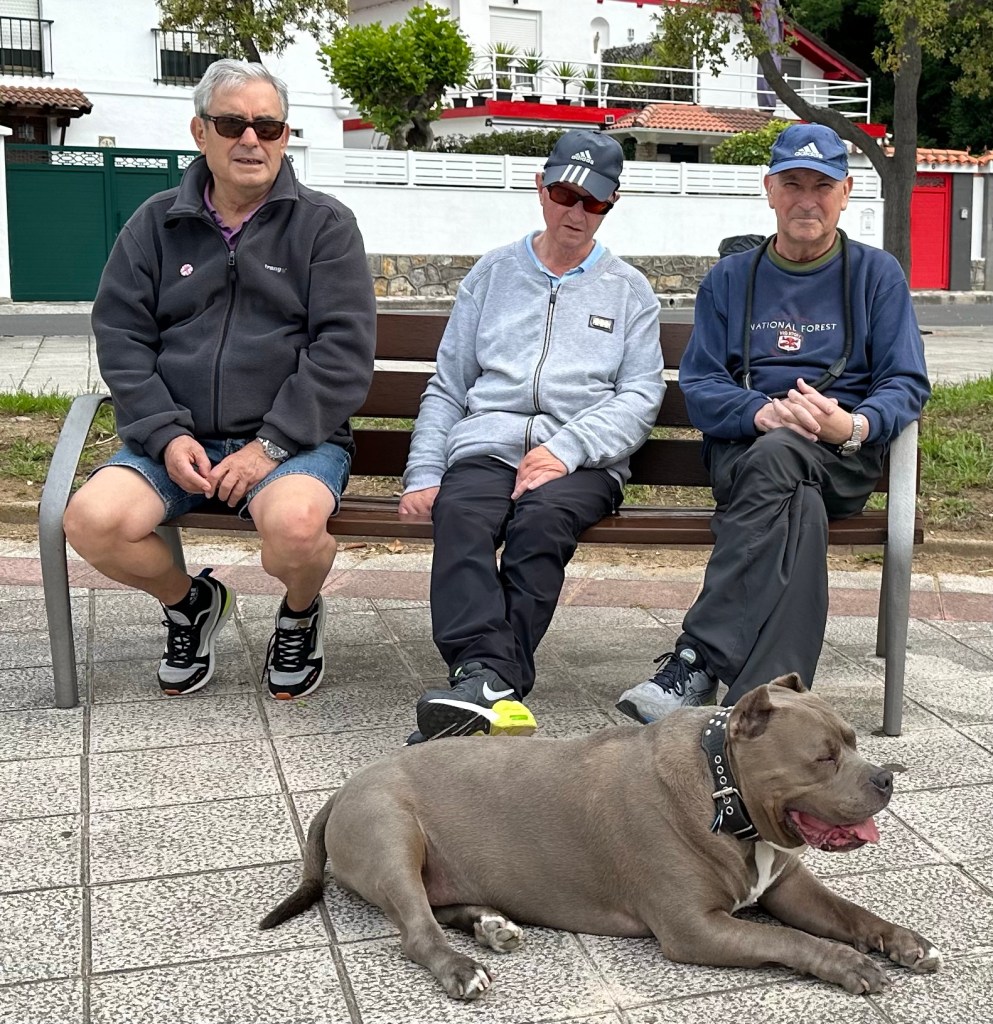
I took the metro to Portulagete, had a coffee and realized I was on the yellow arrows. They led to a very nice asphalted bike and pedestrian trail which led all the way to Pobeña, about 12 km (7.5 m). Just before Pobeña I had a fresh orange juice. (I am going to try to eat and drink better this week). I met three men and a dog in Pobeña and we talked about how far I was from home and how one reaches San Sebastián step by step, day by day. They told me there had been a desprendimiento, or landslide, on the coastal Camino path and I would have to take a desviación.

Un perro grande

It was great to be back on the coast again, even if I missed the bit that the landslide closed, with the waves crashing against the rocky shore, the sweeping views and brisk salty breeze. I grew up close to the ocean and spent much of my career on offshore rigs. We all come from the sea and feel a sense of home when we are near it.

Who is that Boy upon the Beach?
Who is that boy down on the beach,
Daring the waves, his sand to breach?
And when they crash upon his turf
He chases them off into the surf,
And surging through the frothy wall
He claims the deep and rules it all.

And who the girl upon the land
Who writes her name into the sand
And watches as the waters play,
Then retreat and wash it all away?
You’ll not have me, she tells the main
And etches in her name again.

Who the boy, why of course it’s me!
And the girl? My lovely queen to be!

As might benefit the start of a new week, I have left Basque country and entered Cantabria. Now, I find myself in Castro-Urdiales, a pleasant town popular with the tourists. I had a nice meal of anchovies and merluza with some local Cantabrian white wine, while looking over the harbor and shooing pigeons away.

Today was a long but not topographically challenging hike. Tomorrow will be coastal and then inland again but only about 10 miles in total. That’s okay. My feet are already crying for a break.

“Are you Basque?” I asked, trying to make conversation. “No! I am from Santander.” I had just entered Onton, the first village of Cantabria!
Onton
My lunch break